
Wait time for new book arrivals may increase. Learn more

270 of 1133 results
Thumbnail

New Year, New You: Books to help you reach your goals

January 27, 2021

New year, new you? You bet.

A new year gives us a chance to define, commit and achieve the personal goals that help us grow into better versions of ourselves. If you're looking for resources to help you set obtainable goals, Charlotte Mecklenburg Library has you covered. Myers Park Library Leader Harold Escalante shared some of the self-improvement titles below with WCNC Charlotte Today host, Beth Troutman. Which one will you add to your reading list?

Watch the segment here

Click here to borrow titles from the “New Year, New You” book list

Adult fiction

The Alchemist by Paul Coelho

A special 25th anniversary edition of Paulo Coelho’s extraordinary international bestselling phenomenon - the inspiring spiritual tale of self-discovery that has touched millions of lives around the world. Combing magic, mysticism, wisdom and wonder, The Alchemist has become a modern classic, selling millions of copies around the world, and transforming the lives of countless readers across generations. Paulo Coelho's masterpiece tells the mystical story of Santiago, an Andalusian shepherd boy who yearns to travel in search of a worldly treasure. His quest will lead him to riches far different--and far more satisfying - than he ever imagined. Santiago's journey teaches us about the essential wisdom of listening to our hearts, of recognizing opportunity and learning to read the omens strewn along life's path, and, most importantly, to follow our dreams.”
 

My Grandmother Asked me to Tell You She’s Sorry by Fredrik Backman

From the author of the internationally bestselling A Man Called Ove, a charming, warmhearted novel about a young girl whose grandmother dies and leaves behind a series of letters, sending her on a journey that brings to life the world of her grandmother's fairy tales.”
 

Adult Nonfiction

The Self-Care Solution:  A Year of Becoming Happier, Healthier and Fitter—one Month at a Time by Jennifer Ashton

Dr. Jennifer Ashton is at the top of her field as an ob-gyn and news correspondent. But even at the top there's still room to improve, and with The Self-Care Solution, she upends her life one month at a time, using her own experiences to help you improve your health and enhance your life. Dr. Ashton becomes both researcher and subject as she focuses on twelve separate challenges. Beginning with a new area of focus each month, she guides you through the struggles she faces, the benefits she experiences, and the science behind why each month's challenge - giving up alcohol, doing more push-ups, adopting an earlier bedtime, limiting technology - can lead to better health. Month by month, Dr. Ashton tackles a different area of wellness with the hope that the lessons she learns and the improved health she experiences will motivate her (and you) to make each change permanent. Throughout, she offers easy-to-comprehend health information about the particular challenge to help you understand its benefits and to stick with it. Whether it's adding cardio or learning how to meditate, Dr. Ashton makes these daily lifestyle choices and changes feel possible - and shows how beneficial a mindful lifestyle can be.
 

Bounce Back.  How to Rescue Your Finances During Tough Times by Mitch Horowitz

The five works abridged and introduced by historian and New Thought scholar Mitch Horowitz in Bounce Back give you the greatest possible opportunity to navigate economic crisis and poise yourself for recovery. Revolutionize your budgeting skills and be ready to take advantage of economic upswing with George S. Clason's classic guide to personal finance, The Richest Man in Babylon. How to Attract Money is Joseph Murphy's most effective program of visualization. Offering specific prayers and affirmations, Murphy brings you closer to your goals and helps you attain the life you want.  Russell H. Conwell's motivational classic Acres of Diamonds teaches you to think in practical ways and transform seemingly modest ideas into large returns. Transcendentalist philosopher Ralph Waldo Emerson offers his principles for self-directed living in Power and Wealth, helping you focus and exert your will in the world. Think and Grow Rich, the world's greatest book on successful living, provides Napoleon Hill's famous thirteen steps to wealth and achievement. Open the door to financial empowerment and bounce back from challenging times with these great primers of self-potential.
 

The Gifts of Imperfection by Brene Brown

In The Gifts of Imperfection, Brene Brown, a leading expert on shame, authenticity and belonging, shares ten guideposts on the power of Wholehearted living - a way of engaging with the world from a place of worthiness.
 

Maybe You Should Talk to Someone by Lori Gottlieb

Gottlieb (Marry Him) provides a sparkling and sometimes moving account of her work as a psychotherapist, with the twist that she is in therapy herself. Interspersing chapters about her experiences as a patient with others about her work, she explains, "We are mirrors reflecting mirrors reflecting mirrors, showing one another what we can't yet see." By exploring her own struggles alongside those of her patients, Gottlieb simultaneously illuminates what it's like to be in and to give therapy. As she observes, "Everything we therapists do or say or feel as we sit with our patients is mediated by our histories; everything I've experienced will influence how I am in any given session at any given hour." From "John," a successful TV producer who has walled himself away from other people, to "Julie," who has a terminal illness and is struggling to find her way through her life's closing chapters, Gottlieb portrays her patients, as well as herself as a patient, with compassion, humor and grace. For someone considering but hesitant to enter therapy, Gottlieb's thoughtful and compassionate work will calm anxieties about the process; for experienced therapists, it will provide an abundance of insights into their own work.
 

Young Adults (YA)

Top 10 tips for Developing Money Management Skills by Larry Gerber

Readers are encouraged to think about money as a tool-like a Swiss Army knife that can be used for many different tasks, to create things we want in our lives. Money is like a tool, in more ways than one. It is an all-purpose survival kit because life gets tough without it. If we handle money carelessly, it can do serious damage. And just like any tool, sometimes it works great, sometimes it doesn't. The ten tips found in this book are ideas shared by many people, from billionaires to working-class moms, dads and kids. Readers will learn about spending, saving, investing, setting financial goals, budgeting, borrowing and seeking financial advice. Some tips involve doing specific things: writing, adding and subtracting. Others suggest ways of thinking about money and what we do with it. This volume is intended to help readers get the most out of this tool we call money, whether dealing with a lot of it, or just a little. Readers are encouraged to think further with 10 Great Questions to Ask an Economics/Finance teacher and Myths & Facts.
 

Chicken Girl by Heather Smith

Poppy used to be an optimist. But after a photo of her dressed as Rosie the Riveter is mocked online, she's having trouble seeing the good in the world. As a result, Poppy trades her beloved vintage clothes for a feathered chicken costume and accepts a job as an anonymous sign waver outside a restaurant. There, Poppy meets six-year-old girl Miracle, who helps Poppy see beyond her own pain, opening her eyes to the people around her: Cam, her twin brother, who is adjusting to life as an openly gay teen; Buck, a charming photographer with a cute British accent and a not-so-cute mean-streak; and Lewis, a teen caring for an ailing parent, while struggling to reach the final stages of his gender transition. As the summer unfolds, Poppy stops glorifying the past and starts focusing on the present. But just as she comes to terms with the fact that there is good and bad in everyone, she is tested by a deep betrayal.
 

Children

B is for Breathe: The ABC’s of Coping with Fussy and Frustrating Feelings, by Melissa Monroe Boyd

From the letter A to the letter Z, B is for Breathe celebrates the many ways children can express their feelings and develop coping skills at an early age. Fun, cute and exciting illustrations, this colorful book teaches kids simple ways to cope with fussy and frustrating emotions. This book will inspire kids to discuss their feelings, show positive behaviors and practice calm down strategies.

If you Come to Earth by Sophie Blackall

Meeting children from around the world gave Caldecott Medalist Blackall (Hello Lighthouse) a vision of a book "that would bring us together," she explains in an author's note. This exquisite catalogue of human experience is the result. A child with an elfin red cap, white skin, and black hair frames the story, addressing a "Visitor from Outer Space." Magnificent spreads journey through the solar system and descend toward the Earth's surface, zeroing in on a quilted landscape. Fragmentary, often droll descriptions of Earth-side existence follow, about bodies and aging, home and travel, eating and drinking ("Some of us have more food than others") and relationships ("Sometimes we hurt each other. It's better when we help each other"). Wide-eyed human characters of varying shapes, ethnicities, and abilities show kind regard for each other: a librarian offers a tissue to a man overcome; dinner table companions share animated conversation. Even for the accomplished Blackall, the artwork is dazzling. Encyclopedic paintings of the natural world - birds, sea life, an acorn and more - are rendered in painstaking detail and brilliant colors. It is a book that can be shared with strangers, visitors, friends old and new - a work in which differences build to reveal an inclusive human family on a single, precious planet.

A Year in Our New Garden, by Gerda Muller

Anna and Benjamin move with their parents to a new house in the middle of a busy city. The wonder of this house is that it includes a large garden among the tall apartment buildings. Muller explores the design and planting of this city garden through the eyes of the children. This title can be read to younger kids as the story of a family creating a garden. Older readers will appreciate in-depth explanations about the actual components needed to design a real garden. The narrative follows the family as they move from planning to planting to harvest. Multiple illustrations cover each page. Larger drawings that show the garden as a whole are combined with small framed and unframed insets that highlight specific details. The beautifully detailed paintings invite close inspection as the seasons change and the children play, picnic, plant, harvest and enjoy the garden's wildlife.

 

Thumbnail
Words and lyrics from Black female artists help one woman find her voice.

Word to Solange and Amanda Seales

January 28, 2021

This blog was written as part of Charlotte Mecklenburg Library's Black Lives Matter program initiative. Learn  more about the program and corresponding events here.

I often find myself relating my feelings with music as it seems to express my sentiments exactly when my own words fail me. Other times, I'll read a sentence confirming, once again, I'm not alone in the ongoing negative sequences specifically related to Black folks. Solange’s album A Seat at the Table, and Amanda Seales’ book Small Doses made me feel seen and heard as a Black woman. While it's been four years since the release of Solange's most notable album and one year since Amanda Seales' debut book release, the need for acknowledgment by other Black women is still ever-present. Solange’s album and Amanda Seales’ book gave me a presence as a Black woman. My words no longer fail me, and hopefully, others will feel seen and heard as well. Below, you will find lyrics and thoughts from Solange Knowles and Amanda Seales accompanied by my interpretation of their work.

“Word,” a shortened phrase from "Word is bond," is used in a sentence as a question, comment or statement. It means "truth" or "I speak truth."

Ex:

"Word is bond, I checked out 99 books yesterday."

"Word? 99 books. Say, word."

"Word."

Word to Solange and Amanda Seales

"Don't touch my soul/ When it's the rhythm I know."-- Solange

Having to move through life always on the defense, while our white colleagues whimsically live life on the offense, inserting themselves in conversations instead of listening, and claiming allyship with bare minimum effort while audaciously high expectations of reward and recognition. Knowing your smile isn't owed to anyone but expected to soften the blow of truth because fragile feelings take precedence. This is the price you pay when you're Black and work in corporate America.

"When they go low, we keep the same energy."-- Amanda Seales

This is the thought process of every person of color when dealing with colleagues or any person who checks the "white" box on survey sheets who meets them with microaggressions, racial complicity or bias. Unfortunately (and fortunately for others), our way of action is often, if not always, a watered-down version of the reflection. We must always remain professional and calm in the face of clear wrongdoings because our tone, body language and facial expressions are heavily considered before our words. Even still, when armed with facts and professionalism, your chances of being called into Human Resources are often too great. To anyone who's lived life at the center of everyone else's world, accountability will always feel like an attack.

"Don't test my mouth/ they say the truth is my sound." -- Solange

2020 called out and urged organizations to state their position in the movement of racial injustice and inequity. Across industries, companies have filled their leadership boards of vital decision-makers. Where diversity lacked, there was an acknowledgment and pledge to diversify. While leadership roles are important, it's the critical roles of decision making that are important to have filled by people of color especially if your organization magnifies its efforts with equity and diversity training across departments. Yet still, it doesn't reflect its diversity speech in administration roles.

The promises of tomorrow with what can be done today gives little hope to those who believe in the companies they work for. It gives, "We want your opinions, but we'll box them up and store them in the basement for never later" vibes.

"Don't touch my crown/ they say the vision I've found."-- Solange

There was an unmasking and undoing taking place when we clocked out of work for the evening. Now, more than ever, in the face of racism and racial inequity, we remain undone and unmasked, showing our true selves without apology. Taking up space and creating tables to fit our needs. Our dreams, desires and needs are no longer deferred but made into reality on our own accord.

P.S. "I'm not hostile, I'm passionate." -- Amanda Seale

--

This blog post was written by Tiffany Grantham, a senior library assistant at West Boulevard Library.

Thumbnail
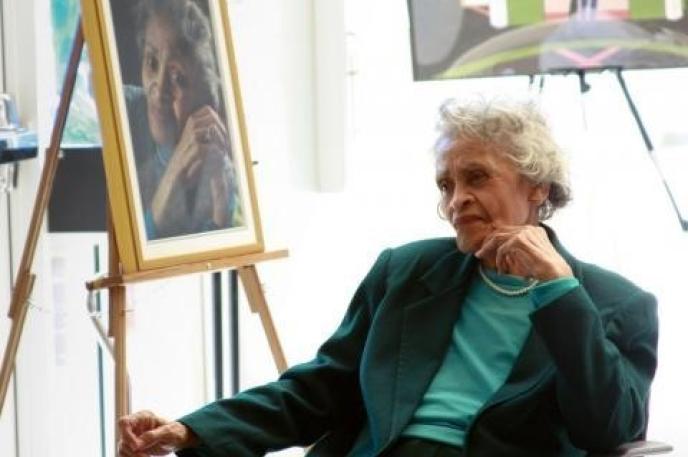
A photograph of Allegra Westbrooks at then Beatties Ford Road Regional Library

The pioneering woman: A history of Allegra Westbrooks

February 1, 2021

Allegra Westbrooks was the first African American public library supervisor in North Carolina. Ms. Westbrooks grew up in Fayetteville, NC where she spent her childhood peeking through the windows of white-only public libraries. Her mother, a schoolteacher, passed a love of books down to her. She attended Fayetteville State Teachers College and Atlanta University where she received a Bachelor of Science in library services. 


Brevard Street Library, 1944 


When she moved to Charlotte in 1947, only two libraries existed for the Black community: Brevard Street Library and its “sub-branch” in Fairview Homes Public Housing on Oaklawn Avenue. 


Citizens Advisory Council meets with Allegra Westbrooks, Head of Negro Library Services  


Charlotte Mecklenburg Library (then Public Library of Charlotte and Mecklenburg County) hired Ms. Westbrooks in 1947 as the head of Negro Library Services at the Brevard Street Library. To attract the Black community to these two branches, Ms. Westbrooks launched a campaign to host prominent speakers at Black churches “to sell the gospel of books and reading.” She also visited the Young Women's Christian Association (YWCA) and Girl Scouts to form coalitions to increase usage of the Black libraries. 


Female librarians assisting children on the bookmobile, 1966 


Ms. Westbrooks influenced many people to go to libraries through her public efforts. Many community members remember her visting them with a bookmobile to inspire them to read. Ms. Westbrooks said, “It is gratifying, when you’ll be on the street and see somebody, and they say, 'I used the book mobile. I want you to meet my four children. I insist that they read'.” She would also pick up books that the Black community requested at Main Library once a week.


Man entering Brevard Street Library, 1948

The library system was desegregated in 1956, but the Brevard Street Branch continued to operate until December of 1961 when it was closed and demolished as part of the Brooklyn area urban redevelopment project.

Ms. Westbrooks was promoted Head of Acquisitions in 1950 at Main Library. Charlotte Mecklenburg Library officially integrated on November 19, 1956.  Hoyt R. Galvin, director of libraries 1940-1971, spoke to her undeniable skills and knowledge:

“Her recommendations were good, and I was pleased to have her join our staff, but I didn’t realize the library and the community were getting a jewel. She carries a major responsibility for the countywide public library system in coordination of adult book selection and is head of all book acquisitions. In a day when 1,000 new book titles are published every day, this is a major task. There are subject specialists who know the literature of their field in a superior fashion, but Miss Westbrooks is the most knowledgeable all-around book specialist in North Carolina.”

Ms. Westbrooks’ career with the Library spanned 35 years, but her legacy continues today. She is not only honored for her incredible achievements as a pioneer in the Charlotte Mecklenburg Library system, but also for the many extracurricular activities and organizations she served on. In 1969, she was named “Outstanding Career Woman of 1969” at The Gold Rose Awards hosted by the White House Inn. 

--

This blog was written by Robinson-Spangler Carolina Room staff at Charlotte Mecklenburg Library.


Sources

Borden, Pat. “Retiring Worker symbol of change in local library.” The Charlotte Observer, February 10, 1984.

Osborne, Dorothy. “Top Career Woman Is ‘Giant For Good’.” The Charlotte Observer, October 17, 1969.

Perlmutti, David. “A love of books, nurtured by mother.” Black History Month, Crossing the Barrier, February 4, 2009.

Thumbnail
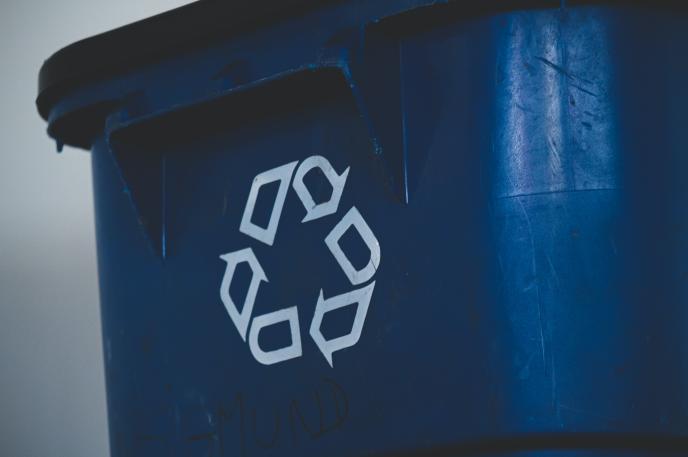
Learn to recycle right with Charlotte Mecklenburg Library and Mecklenburg County.

Learn to recycle right with Charlotte Mecklenburg Library and Mecklenburg County.

April 19, 2021

Mecklenburg County 7 Recycling FAQs & Answers

On May 11, Charlotte Mecklenburg Library will host a FREE webinar to teach our patrons ages 12+ how to Recycle Right! Advanced registration is required to receive the participation link. Recycling resources will be shared with registrants before and after the program.

Register here

Library staff is organizing the event with two residential recycling educators. In preparation for the event we asked the public educators what they most need residents to understand. They didn’t hesitate to explain how materials need to be prepared correctly to be efficiently sorted at the recycling center. Here are their two critical requests:

  • Do not bag recyclables! Plastic bags cause tremendous operational and financial challenges for our processing facility. No flexible plastic wraps, films, bags or packaging should ever be put in the recycling cart.
  • Recyclables must be loose, clean, dry and empty! Recyclable items must be placed individually in the recycling cart, not in bags, for the separation equipment to function properly. Never put one type of recyclable inside of another (i.e. aluminum cans in a cardboard box.) All recyclables must be non-contaminated. This means every individual item must be clean, dry and empty, with no residue of the original contents (i.e. food.)


Following are the questions solid waste staff receive weekly*:

*Please note these are the recycling guidelines for Mecklenburg County, requirements may differ slightly in other counties.

  1. What plastic items can I put in my residential curbside cart?

ONLY plastic bottles and jugs, with a pourable neck or spout that is smaller at the top than the base, are accepted. These are the only pure plastic types that we can sell on the recyclable materials commodity market. Labels do not need to be removed.

Examples include: Water and soda bottles of any colors, milk or juice jugs, laundry jugs, shampoo or lotion bottles (pumps should be removed and trashed first.)

Please note the following common household plastics are not accepted in Curbside Recycling:

Plastic bags/bubble wrap, produce clamshells, yogurt cups, dairy tubs, takeout food containers, styrofoam, zip pouches, vitamin and medication bottles, disposable utensils and plastic cups, buckets, storage containers, hoses.

  1. What recycling symbol numbers (1, 2, 5, 7 etc.) are accepted locally?

None. See question FAQ #1 above listing the only plastics that are acceptable.

The RICs (resin identification codes) listed inside the chasing arrows triangle on the bottom of plastic packaging are, unfortunately, no longer reliable. Therefore, we do not use them anymore.

  1. What do I do with lids and caps?

Never place loose lids or caps in the recycling cart. Loose lids and caps are small and fall through our machines and end up contaminating the glass that is collected. Glass mixed with plastic and metal caps (among other things) cannot be sold to processors as raw materials as it is considered contaminated – so keep the plastic caps on the bottles.

It is “ok” to leave securely attached plastic caps and lids on clean, dry and empty cartons, bottles, jugs and jars. Never try to recycle caps by themselves.

  1. How much grease is tolerated to recycle pizza boxes?

Somewhere between a smidge and a tad; Yes that is an intentionally vague answer! Of course we prefer to only accept clean and dry cardboard to only process and sell by the ton the highest quality recyclables. We definitely do not want whole pieces of pizza or crust left in the box (yes it happens!) Cheese, sauce and crumbs are also contaminants. If ½ your box is clean, rip that part off to recycle and please trash anything with food or grease residue.

  1. Are aluminum foil and pans (pie, lasagna, roasting) recyclable?

No. Our machines can only recognize and sort aluminum cans. Additionally, more often than not these common aluminum food storage items are contaminated with food. Remember we do not want food residue on anything.

  1. How do I dispose of household batteries?

Rechargeable batteries must be disposed of properly because they contain hazardous elements such as lithium, nickel, and metal hydrides. Never place rechargeable batteries in your trash or recycling carts as they are the number one cause of fires at our facilities. Please take rechargeable batteries to the household hazardous waste station at one of our full service drop off centers.

Traditional alkaline batteries can be put in the trash to be sent to the landfill, because they do not contain any hazardous elements.

  1. What types of glass can be recycled?

Similar to plastics (see FAQ #1), only glass bottles and jars typically used in your kitchen or bathroom are accepted. All colors of glass are accepted. Caps and lids can remain on, if securely attached, (see FAQ #3). Labels do not need to be removed.

We prefer separated glass be brought to our full service drop off centers and deposited into the large yellow dumpsters marked, “Clean Glass Only.”

Please note the following common household glass items are not accepted:

Dishes and glasses, pyrex/corning ware, vases, bulbs, picture frames, windows, aquariums, ceramics, porcelain, crystal.

To learn more and have all of your questions answered live, please register for an upcoming Recycle Right presentation. If you still have questions, email [email protected] or visit wipeoutwaste.com.

--

This blog was written by Maitri Meyer, residential waste reduction educator for Mecklenburg County.

Thumbnail
Organize your home with Joanna Clausen and Charlotte Mecklenburg Library.

Let’s get organized with Joanna Clausen of NEST Organizing

April 20, 2021

Does the clutter in your home have you feeling stressed and overwhelmed? Does your home look out of control? An organized home helps you focus more, it relieves stress and saves you time. It improves your overall health.

Join us online as Joanna Clausen, Owner of NEST Organizing in Huntersville, NC, shares her tips and tricks for getting organized. Joanna is a mother of three and a professional organizer. She uses her passion for organization to help others take control of their home and stuff. Learn more about Joanna here.


To learn the NEST organization process for how to reset, declutter, sort, purge and clean:

May 4, 2021 at 7 p.m. Register here.

May 5, 2021 at 6 p.m. Register here


Make cooking meals easier by having a clean and ready-to-go kitchen. To learn techniques to organize your kitchen and pantry:

May 11, 2021, at 7 p.m. Register here.

May 12, 2021 at 6 p.m. Register here.


Turn your home office into a productive workspace. To declutter and sort your home office and papers:

May 18, 2021 at 7 p.m. Register here.

May 19, 2021 at 6 p.m. Register here.


Keep, donate, trash and shred. This is a personal journey. Let’s create organizational habits, reenergize your home and organize for success.

Thumbnail
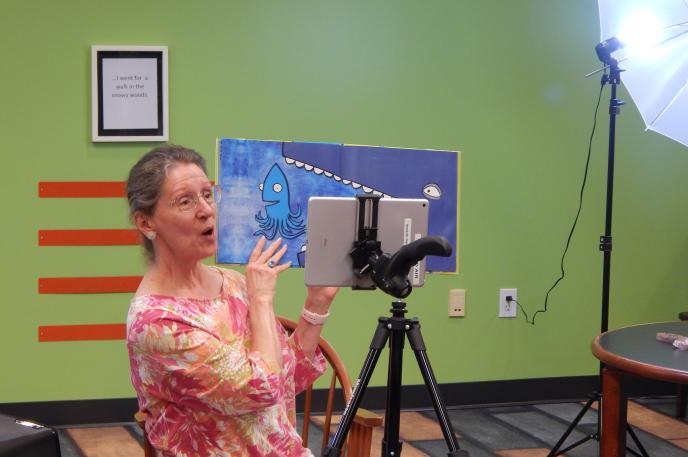
Participate in the art of oral and traditional storytelling  with virtual Storyvine Thursday, May 6, 2021 from 9:30 a.m.-2:30 p.m.

Storyvine 2021 goes digital

April 22, 2021

Once upon a time there was a storytelling festival. It was derailed by an evil pandemic until, one day, a fearless team of storytellers put their magical forces together to conquer the odds and climb the mighty fortress of digital programming and (cue dramatic music)… share their stories with the world!  

Since 1976, the Charlotte Mecklenburg Library has been partnering with Charlotte Mecklenburg Schools to introduce as many local children in grades K-5 as possible to the artform of oral and traditional storytelling. A team of Library staffers across all 20 Library branches raise their hands each May to become the Frontline Storytellers, heading into CMS partner schools to tell stories from all over the world to thousands of Charlotte school children in a single day. 

Although unable to participate in 2020, the Charlotte Mecklenburg Library is thrilled to announce that we are back in full force with Storyvine 2021, which will be fully digital and open not just to CMS students but, for the first time ever, to the public as well. 

On Thursday, May 6, 2021 from 9:30 a.m.-2:30 p.m., there will be more than 10 different storytellers sharing traditional tales on the ImaginOn Facebook page and Charlotte Mecklenburg Library YouTube channel every 30 minutes from Germany, Russia, Africa, England, Panama, the Caribbean, Peru, the Native American and Appalachian traditions, and more!  

Download our calendar for a full schedule of stories and viewing links

If you’re a teacher or educator who would like to celebrate with us, we’ve created a lesson plan HERE with additional discussion points. 

On behalf of the Charlotte Mecklenburg Library, we invite you to join us for this full-day digital storytelling experience as Storyvine 2021 lives on--dare we say--happily ever after. 

--

This blog was written by Becca Worthington, children's librarian at ImaginOn: The Joe & Joan Martin Center.

Thumbnail
Learn about economic empowerment with the Library's Money Magnets program.

Learn about economic empowerment with Money Magnets

April 22, 2021

Money Magnets, sponsored by Self-Help Credit Union, is a club for kid entrepreneurs that gives families opportunities to learn from local Black entrepreneurs. Money Magnets was one of West Boulevard Library’s responses to the Chetty Study, which highlights conditions that make it difficult for Charlotteans who are born into poverty to transition out of poverty. Money Magnets disrupts poverty by providing resources for economic empowerment to kids and their responsible adults in areas most likely to be negatively affected by this trend.

Money Magnets was piloted as a start-up social entrepreneurial effort during the Charlotte Mecklenburg Library’s observance of Money Smart Week in 2019. Alexandra Arrington, a former child entrepreneur herself, designed and facilitated the programs. Money Magnets teaches elementary schoolers and their families about financial literacy, community-mindedness, and character education within the framework of business ownership. Reinforcement of literacy and vocabulary, building social capital, and encouraging calculated risk are also included. Perhaps the greatest opportunities provided are networking with and being coached by successful local Black entrepreneurs and earning a modest amount of seed money to begin their businesses.

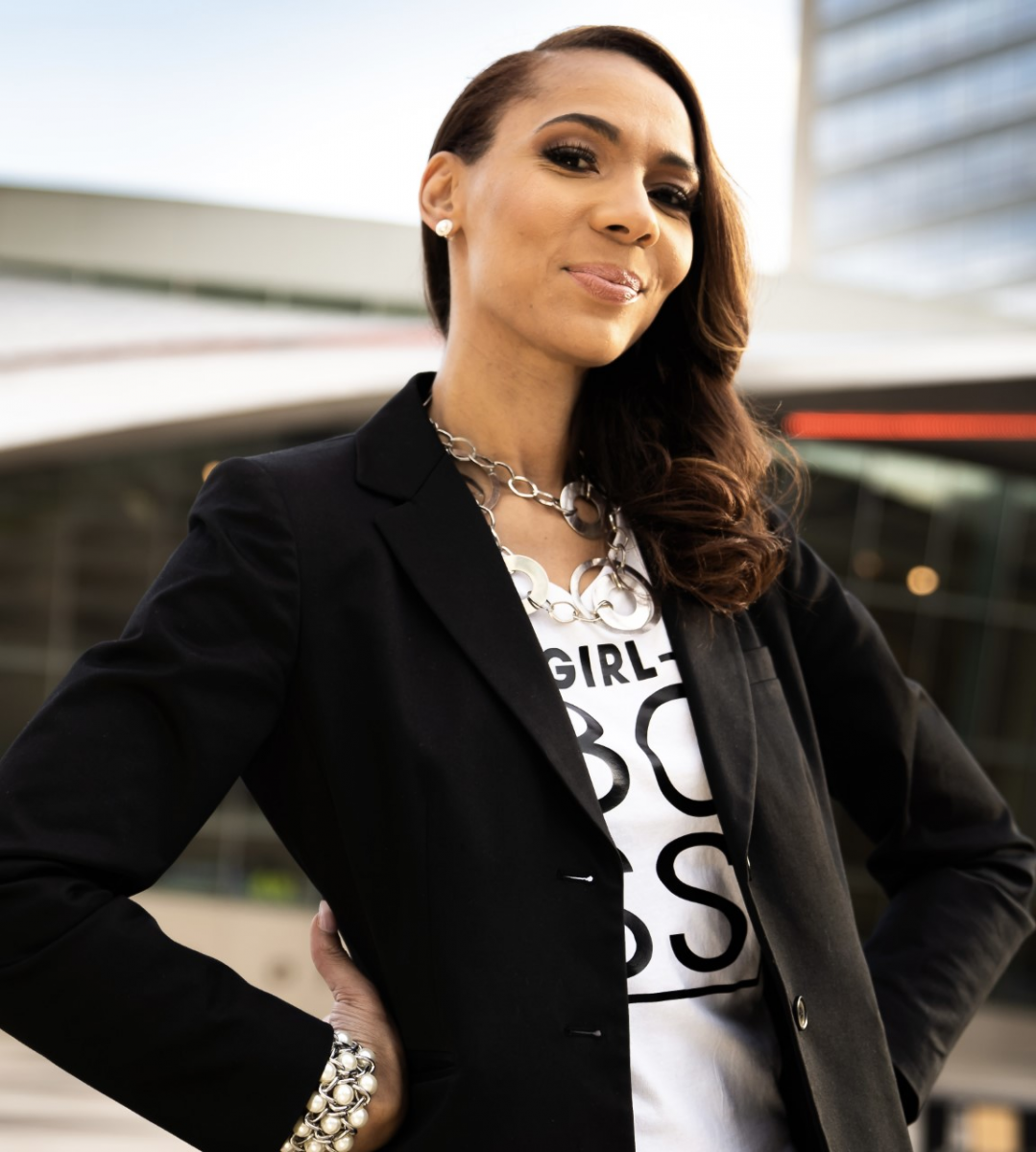
Alexandra Arrington, LCMHCA, NCC, BC-TMH  

Another benefit of our focus on kids’ experience with these concepts is that their responsible adults are also involved and work with the student to support their learning, as well as reinforce their own understanding. The four-session online Money Magnets program offers follow-up individual online coaching as well. KidPreneurs in training who attend three Money Magnets programs, complete a business plan, and pitch their business idea in a R.I.C.H. Circle receive $25 in seed funding for their business plus a $25 Youth Savings Account at Self-Help Credit Union. Learn more about this program and the various sessions offered:  

Session One: The Business of Being You

Got an idea? This session will focus on the importance of being who you are and learning what you like to help you decide on what business to start. Special guest entrepreneur, hip-hop artist, Chief Operating Officer, and multimedia design artist, David “Dae-Lee” Arrington will join us to share his experiences.

This program is offered online from 6-7p.m. on Wednesday, April 28, 2021. Registration is required.  

Register

Money Magnets One-on-One Strategy Session

These individual coaching sessions are an online follow-up program for The Business of Being You. Sessions are offered by appointment only and are geared toward helping kidpreneurs-in-training get one-on-one assistance with fleshing out their business ideas and learning about specific resources. Open to K-5 students and their responsible adults who attended The Business of Being You.

This program is offered online on Saturday, May 1, 2021. Register for one 15-minute session that falls between 1 p.m. and 3 p.m.

Register

Upcoming Session Topics

Each of these programs is followed by relevant One-on-One Strategy Sessions.

The Business of Family Business - May 26, 2021

Special guest entrepreneurs are millionaire and generational wealth expert, Steven L. Stack, and his 8-year-old daughter, Nia.

The Business of Caring - June 30, 2021

Special guest entrepreneur is organic product developer, Ayesha Murphy.

The Business of Launching - July 28, 2021

Surprise special guest entrepreneur.

--

This blog was written by Teresa Cain, librarian at West Boulevard Library.

Thumbnail
A young person reads poetry from Charlotte Mecklenburg Library on a mobile device.

Dive into award-winning poetry for National Poetry Month

April 22, 2021

April is a National Poetry Month and whether you're a fan of limmerick, free verse, haiku or sonnet poetry, Charlotte Mecklenburg Library has your preferences covered. If you're looking to explore a new work of poetry or you're craving a certified classic, check out a book from our list of recommended titles below.

Click here to find this AWARD-WINNING list in the Library catalog.


ADULT

The Tradition by Jericho Brown
2020 Pulitzer Prize winner, Poetry

Brown's third collection (after The New Testament) pulsates with the acute anxieties of racial and sexual difference, the psychologically complex intersections of personal intimacy with social responsibility and the inescapable legacy of violence and pain intrinsic to vulnerable lives in an unjustly constructed world. A consummate craftsman, Brown conveys emotional and provocative content through plainspoken yet subtly lyrical forms whose delicacy only heightens the subversive force of his ideas, which can be delivered with unabashed, declarative candor. Verdict: Though many poems here risk intruding on some readers' comfort zones, Brown's uneasy fusion of art, conscience, eroticism and rage - like any serious poetry worth close attention - aspires to greatness within the fragmented immediacies of our historical moment while suggesting a shared human destination:"A poem is a gesture toward home."

Only as the Day is Long by Dorianne Laux
Teaches at NC State, Pulitzer finalist, A National Book Critics Circle Award finalist and a recipient of the Oregon Book Award and the Paterson Prize

Featuring selections from five books augmented by 20 new poems, this generous volume from Laux (The Book of Men) reads something like a life story: notably, one that begins with familial fear, incest and abuse. Travelling through confusion, adult sex, motherhood, love, fatigue and redemption, Laux ends where she begins: with her mother, who is, to the last, a troublesome nurse. In spite of everything, the poet can't help but celebrate the self's mistakes and triumphs. When Laux welcomes readers into a personal moment, she speaks for humankind: "We've forgotten the luxury of dumbness/how once we crouched naked on an outcrop/ of rock, the moon huge and untouched/above us, speechless." Concrete places abound: bedroom, trailer, hospital psychiatric ward, a porch. There is a lot of sex; for example, "Vacation Sex," an aroused version of a travel tour, revels in its own obsessive pleasure. Some of the best poems here appear toward the chronologically organized collection's end, where humor arrives despite a mother's growing dementia. And in the long biographical poem "Arizona," Laux writes lovingly of that same mother's face as "a map of every place she'd been." This is a catalogue of honest work, from beginning to end.

The Carrying by Ada Limon
Finalist for the National Book Award, the National Book Critics Circle Award and the Kingsley Tufts Award.

National Book Award finalist Limón (Bright Dead Things) here weaves nature, family and grief into a stunning collection. Several poems recount the loss of the speaker's first husband from a drug overdose, but although pains are often described - whether caused by grief, infertility, or a crooked spine - Limón's poems sing with the joy of life: "I wish to be untethered and tethered all at once, my skin/ singes the sheets and there's a tremor in the marrow." The poet mourns not only for people lost but also for irreplaceable things such as languages: "In the time it takes to say I love you, or move in with someone/...all the intricate words/ of a language become extinct." Many poems begin or turn on the unexpected, as in "The Vulture & the Body": "What if, instead of carrying// a child, I am supposed to carry grief?" Occasionally, there are too many unessential details, and although most of Limón's similes are strikingly good, she sometimes settles for the easy: "I saw seven cardinals brash and bold/ as sin in a leafless tree." Nevertheless, in accessible language, Limón writes movingly about finding the spectacular in the everyday. Verdict: Limón's vision is realistic, at times bleak, yet these poems often brim with optimism, revealing a reverent, extraordinary take on the world. Don't miss this life-affirming collection.

YOUNG ADULT (YA)

What My Girlfriend Doesn't Know by Sonya Sones
Christopher Award, the Myra Cohn Livingston Award for Poetry, the Claudia Lewis Poetry Award, a Los Angeles Times Book Prize nomination and a Cuffie Award from Publisher’s Weekly for Best Book Title of the year. But the coolest honor she ever received was when her novel, What My Mother Doesn’t Know, landed her a spot on the American Library Association’s list of the Most Frequently Banned Authors of the 21st Century.

Returning with a sequel to the well-received What My Mother Doesn't Know, Sones delivers another engaging story about young love, this time from the boy's perspective. This free-verse novel opens with 14-year-old Robin worrying that he will soon be dumped by his girlfriend, Sophie (star of the previous book), who is being ostracized at school for dating "the guy whose last name people use as a diss." ("Let's face it/ I'm the type of guy/ who doesn't even have any buddies/ on my buddy list," Robin says.) But Sophie is her own person and together they form a plan to rise above the derision by laughing at themselves. Robin is believable and endearing as he struggles to make sense of his devotion to his "amazing girlfriend," his nascent sexuality and his attraction to Tessa, a girl in his art class at Harvard who is refreshingly unaware that he is the butt of jokes at his high school. When Sophie catches him kissing Tessa, Robin has to do something dramatic to win her back. Concrete poems and comics punctuate the text, adding interest to the form. The author's fans will be delighted to have a new installment written with the same raw honesty and authentic voice as the original.

Punching the Air by Ibi Zoboi and Yusef Salaam
National Book Award Finalist

Zoboi (Pride) and Salaam (one of the Exonerated Five) together craft a powerful indictment of institutional racism and mass incarceration through the imagined experience of Amal, a Black, Muslim 16-year-old facing imprisonment. Amal, a gifted artist and poet attending a prestigious fine arts high school, has his life turned upside down when a nighttime park confrontation leaves a white kid from the other side "of that invisible line/ we weren't supposed to cross" in a coma, and Amal and his four friends on the hook for assault and battery they did not commit. Using free verse, Zoboi and Salaam experiment with style, structure, and repetition to portray "old soul" Amal's struggle to hold on to his humanity through the chaotic, often dehumanizing experience of juvenile incarceration. From the trial onward, the authors liken the pervasive imprisonment of Black bodies to the history of chattel slavery in America ("and this door leads to a slave ship/ and maybe jail"), and describe how educational racism feeds Black students into the school-to-prison pipeline ("I failed the class/ she failed me"). Zoboi and Salaam deliver an unfiltered perspective of the anti-Blackness upholding the U.S. criminal justice system through the eyes of a wrongly convicted Black boy ("shaping me into/ the monster/ they wanted me to be").

CHILDREN

A Light in the Attic by Shel Silverstein
William Allen White children’s Book Award

A fat volume of small illustrated rhymes from Silverstein, who gets down to the level of kids' peeves, spooks, and sense of silliness often enough to score a collective hit. His cast includes a babysitter who thinks her job is to sit on the baby, a selfish child who prays that if he dies his toys will break so no one else can have them, a walrus with braces, and a man who thought he had wavy hair till he shaved it off and found he had a wavy head. There are some funny twists and take-offs on familiar rhymes and tales—such as a speculation on what would happen if Captain Blackbeard shaved, and a warning to the "Rockabye" baby that a treetop is no place to rock: "Baby, I think someone down here's got it in for you." There are also a number of typical twist endings, many of them lame or predictable - but then you can't expect 168 laughs in 168 pages. For undertow, there's the eyeball in the gumball machine (a sentinel reminder that "I" have had enough gumballs) and the fearful "Whatifs" that climb into "my" ear at night. All in all, bright and knowing nonsense.

Firefly July by Paul B. Janeczko
2019 Award for Excellence in Poetry for Children

Organized by the seasons, beginning with spring, this collection of 36 impeccably chosen short poems demonstrates that significant emotional power can reside in just a few lines. In obvious contrast with such small bites of poetry, the large-format design explodes with bright and expressive watercolor, gouache and mixed-media collages. Colors and shapes with willowy details expertly blur or bring bits of the images into focus to create a magical sense of place, time and beauty. The poems range from work by William Carlos Williams, Emily Dickinson and Langston Hughes to that of James Stevenson, Joyce Sidman and Ralph Fletcher. The first verse opens the book with daybreak, and after exploring the whole year, the final selection sends readers off to sleep: "A welcome mat of moonlight/on the floor. Wipe your feet/before getting into bed" (Jim Harrison and Ted Kooser). Every poem evokes a moment, and, combined with its corresponding full-bleed illustration, the season is captured for readers to remember, experience, or anticipate.

Thumbnail
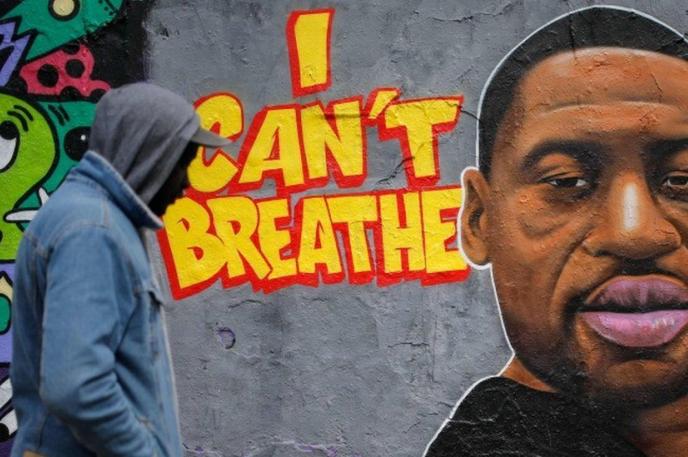
In the wake of last week's guilty verdict in the case against Derek Chauvin, it is important to remember true justice comes when there are no longer cases like George Floyd's and those of the people who don't make national headlines.

Black Lives Still Matter - Part 2

April 29, 2021

This blog was written as part of Charlotte Mecklenburg Library's Black Lives Matter program initiative. Learn  more about the program and corresponding events here.

Last week the man that murdered George Floyd was found guilty by a jury of his peers, was handcuffed, and carted off to prison to await sentencing. I don't believe that people were prepared for the criminal justice system to hold Derek Chauvin accountable for the crimes he committed against George Floyd and it's quite shocking that Derek Chauvin was held responsible. It shouldn't have been, but it was. Many people call this justice, but this verdict was more about accountability. Justice wouldn't let the killing of Black bodies at the hands of police continue to go on. I believe that protesters were fully prepared to cause a stir, and rightly so, there were celebrations in the streets this time. We all breathed a collective sigh of relief when the judge read all three guilty counts, however, it should not be like this.

The trial took several weeks to deliberate, with the world waiting on bated breath. And, if it weren't for Darnella Frazier, I'm not sure we would have reached three significant guilty verdicts. For those who may not know, Frazier was a bystander on the day George Floyd was arrested. She and her 9-year-old cousin happened to be in the neighborhood, along with many other people. They decided to take out her cell phone to record the realities of Floyd's death. First off, I could not imagine the horrors they witnessed -- especially at such an early age. But what I really can't get out of my mind is that without her eyewitness account and video footage (which was the longest and most clear footage recorded that day), would the outcome of the trial be the same? Much like the footage captured of Rodney King, Frazier's video brought the truth to light and ultimately held Chauvin accountable.

Black people's shared experience dealing with the police and lack of justice or accountability is traumatic. The trauma never ends because, on the heels of our collective relief that accountability was served, there was another police shooting of a Black body — this time, a 16-year-old child. There are no words to describe the announcement of yet another Black body being shot down by police. I can gather that numb is a feeling, and outrage. Enough is enough. Reform of the police is a necessity. It will take more than just saying but actually putting it into legislation.  

Since the start of Derek Chauvin's trial, there have been many interactions with police that have happened or been revealed, and it's triggering. People of color have been facing some hard realities these past few weeks. A Black Army Lieutenant, Caron Nazario, was pulled over and harassed by police in Virginia. Although complying with the officer's commands, the officers excessively pursued him and caused an uproar online from the video of the interaction that went viral. Days following the body cam footage of Lt. Caron Nazario's interaction, Daunte Wright was shot and killed by a police officer after being pulled over because he had an air freshener hanging from his rearview mirror. Not even a week after that, police body cam footage was released of a 13-year-old child with his hands up being shot and killed by Chicago police. And even since the initial writing of this blog, there are more names to add to the list of people killed at the hands of police. On top of the Chauvin trial, all these things happened simultaneously, and it's heavy.

Although heavy and traumatic, Black people continue to fight for this so-called justice. All these things are about holding people accountable because justice would require change, and change seems so far away.

True justice comes when there are no longer cases like George Floyd's and all the men and women whose cases came before his and all the cases of the people who don't make national headlines. Black lives still matter.

To read more about the social justice movement, criminal justice, excessive force and the police, check out our Justice and Accountability booklist on the Library's website.

Access the Justice and Accountability Booklist

--

This blog was written and a collaboration of thoughts by De'Trice Fox, adult services librarian; Amrita Patel, library outreach coordinator; and Alesha Lackey, children's services manager.