Wait time for new book arrivals may increase. Learn more

1000 of 1133 results
Thumbnail
The Charlotte Mecklenburg Library is in Week 4 of its Summer Break programming

Take a peek behind the scenes of Summer Break

June 26, 2019

It’s week four of Summer Break! Hopefully you’ve been logging your reading time and activities, but if you haven’t, it’s not too late to enroll in the program and join in on the fun. You can even backdate your reading time to the start of the program, June 1. Keep reading, learning and exploring through the end of the program, August 10, 2019.

Making sure you get rewarded for a summer well spent
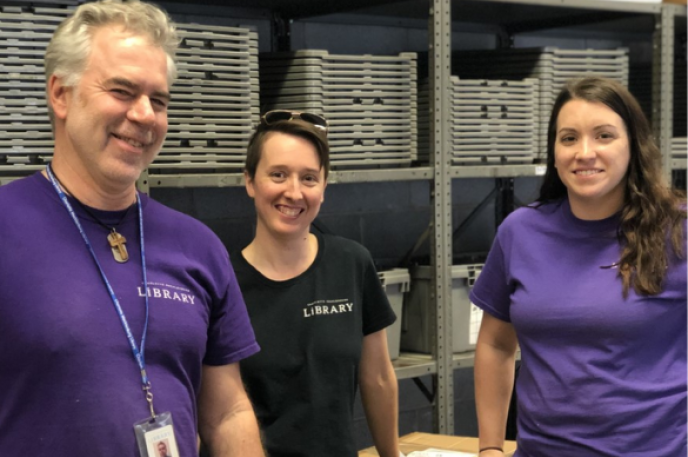
Library staff have been working hard preparing for Summer Break since September 2018 – developing recommended reading lists, engaging programs and fun incentives.

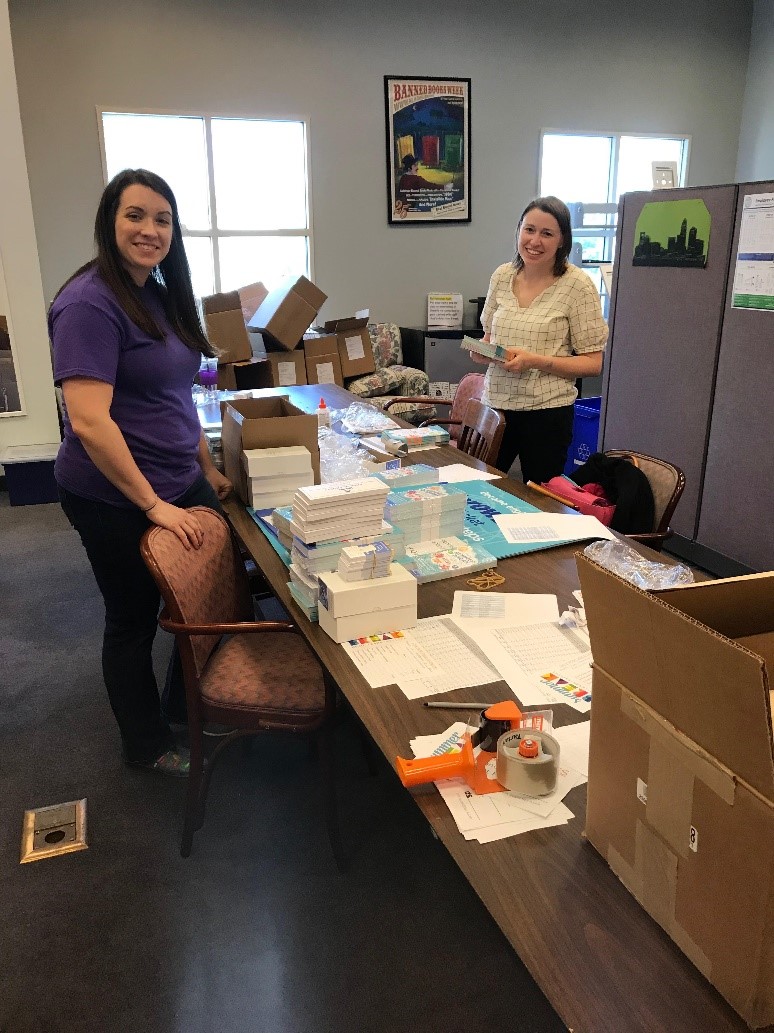
One of the biggest tasks for the team that manages the Summer Break program is choosing, ordering and sorting all the cool incentives you receive upon completion of the program. This year:

  • babies and children earn a new, popular book;
  • teens earn either a new, popular book OR a drawstring library tote;
  • and adults earn either a car magnet OR notebook.

Once incentives are chosen, the team works with the Marketing and Communications Department to create and order lots of flyers, posters and other print materials to help us tell you all about the program. Printed pieces are sorted and distributed to all 20 library locations.
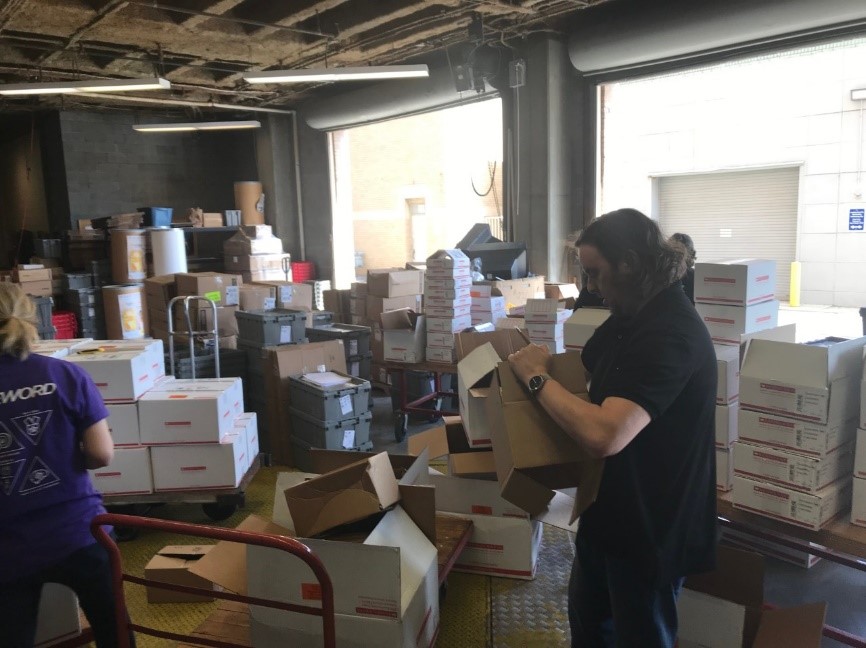
Staff then order what feels like an ocean of books for babies, children and teens. Each box must be opened, organized and sorted so that every library location has just the right selection of books for participants to choose from when they complete Summer Break.

Staff also sort drawstring book totes, notebooks and car magnets so that teen and adult completers have a variety of colors to choose from at their library location. Check out the beautiful bright yellow!
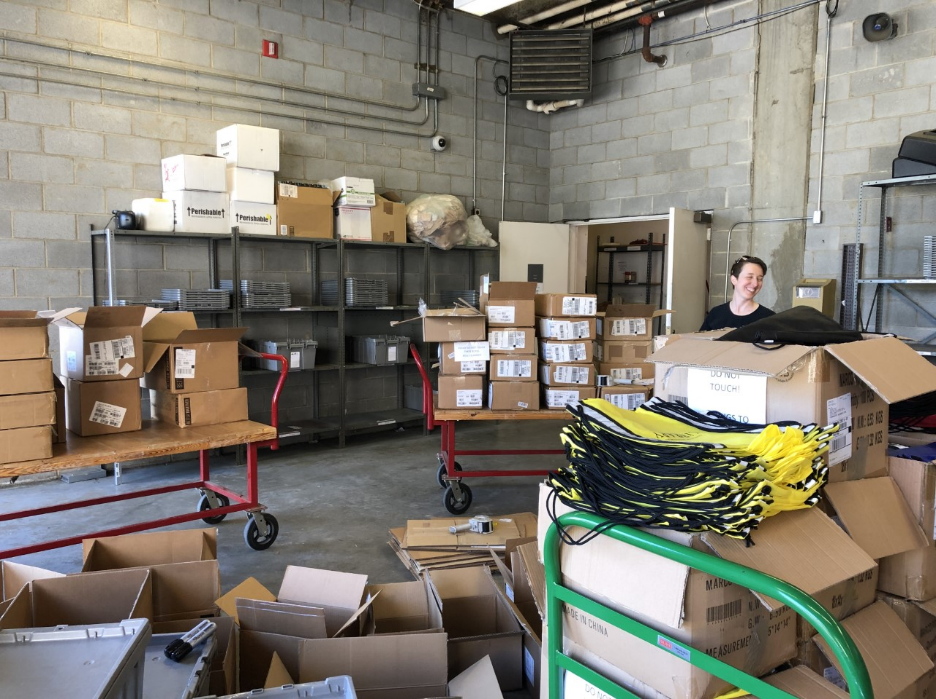
Once boxes are sorted and labeled, they are taken to the dock to be delivered to library locations.

A lot of hard work is put into Summer Break with the goal of participants enjoying the program and having fun reading and learning all summer long.

To learn more about how the Summer Break program works, and how you can sign up to participate, visit summerbreak.cmlibrary.org.

REMINDER: all library locations are closed for July 4.

Comments? Questions?

Are you having problems with the Summer Break website or your account? Do you have questions about the program? Feel free to stop by your local library for assistance, call 704-416-0101 or email [email protected].
Thumbnail
Scaleybark Library relocating to a new home fall 2019

Scaleybark Library relocating to a new home fall 2019

June 27, 2019

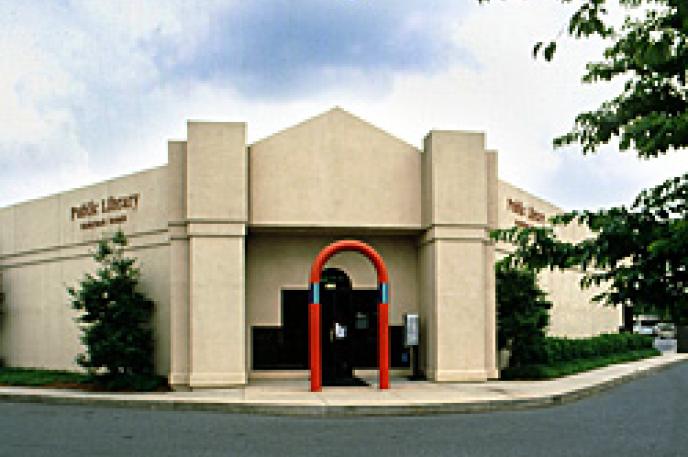
We’re excited to inform you Scaleybark Library will soon move to a new, larger home! This fall, we expect to move into our new location at 4429 South Boulevard, approximately 0.4 miles south of our current location. The new location is currently under construction, and as we near completion, we’ll have more information to share with you about Library services and about a Grand Opening date to celebrate.  

Why is the Scaleybark Library moving? The new location is nearly three times the size of the current branch. This larger footprint will offer more room for programs, services, community and meeting rooms, and resources. We’re bringing you these changes based on your feedback, and with funding from Mecklenburg County. 

As construction proceeds, we'll provide more information so customers can understand service options during the move to the new location and keep you engaged with the library. Your patronage is vitally important to us, so please stay tuned for more information. You can find updates on all Library building projects at www.cmlibrary.org/building-projects.  

In the meantime, Scaleybark Library is still open and operating as usual at 101 Scaleybark, Charlotte 28209. This is the perfect time to stop in, sign up for Summer Break, attend a program, or check out materials. We value you as a customer and look forward to sharing the exciting changes to our relocated library with you when we re-open! 

Thumbnail
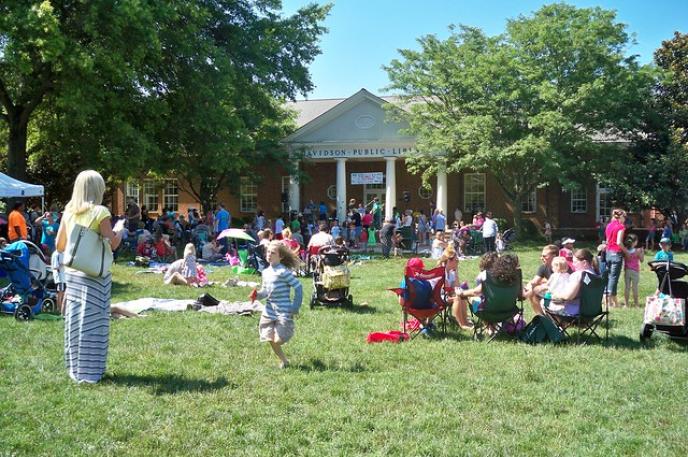
Charlotte Mecklenburg Library customers enjoy summer time at Davidson Library in Davidson, North Carolina

Mastering Great Outdoors Month!

June 28, 2019

June is Great Outdoors Month!

Whether you’re biking or beachcombing, the Library has everything you need to prepare for your summer outside!

Great Outdoors Month began as a weeklong celebration in 1998 and grew into a monthlong celebration to highlight outdoor recreation benefits.  According to a recent study, spending two hours a week in nature really is good for your health.  It’s also free!  We’re sharing our favorite ways to explore the outdoors this summer:

  • Johnny Molloy’s The Best in Tent Camping guide will help you find the perfect campsite.  Download the book before you go for detailed maps and ratings. 
  • Do you love the sound of nature but not the bugs or harsh elements?  Stream or download your favorite sounds, like a peaceful mountain stream or the ocean with Freegal, a music service free with your library card.
  • Prepare for any outdoor adventures by with the latest digital issues of Backpacker magazine.  Other nature magazines available on your mobile device or computer include Mother Earth News and Field and Stream. 
  • Take a hike—literally—with recommendations from Backpacker Hidden Gems or North Carolina hiking guides in our catalog, also available to download.
  • Bring your school-aged children to a Parks and Rec program this summer at many of our locations (registration required).   We’ve partnered with them to bring a little outside indoors with turtles, insects, and wildlife programs. 
  • If you’re tired of roasting the same old s’mores, try something different around your campfire with recipes from The Campout Cookbook.
  • Summer is a terrific time to plant beans, tomatoes, and Brussels sprouts; get tips for your garden from North Carolina Extension Gardener Handbook
  • Pack a healthy snack for your next hike or bike trip with an energy bar recipe from Power Hungry
  • Are you curious about whitewater rafting or mountain biking, but don't know where to begin?  Joe Miller’s  Adventure Carolinas is full of advice for adventure activity beginners.
  • Create an environmentally friendly and sustainable home with Building a Sustainable Home.
  • Dust off your bicycle and find new paths in Road Biking North Carolina. If your tires are flat, choose from our collection of bicycle repair manuals.
  • Teach children the skills you learned from Boy Scouts with The Young Adventurer's Guide to (almost) Everything.
  • Read Camp, a collection of camping and living outdoors stories, around a campfire in your backyard.
  • Take a copy of Fishing Essentials for Dummies with you and rent a fishing pole from Mecklenburg County
  • Let the forest heal you!  Learn about Shinrin-yoku, the Japanese practice of healing forest bathing, with these books.

Don’t forget to log your outside fun as part of your Summer Break activities.  The entire family can explore or play outside today with these suggested activities as we celebrate the Great Outdoors all summer long!

Thumbnail
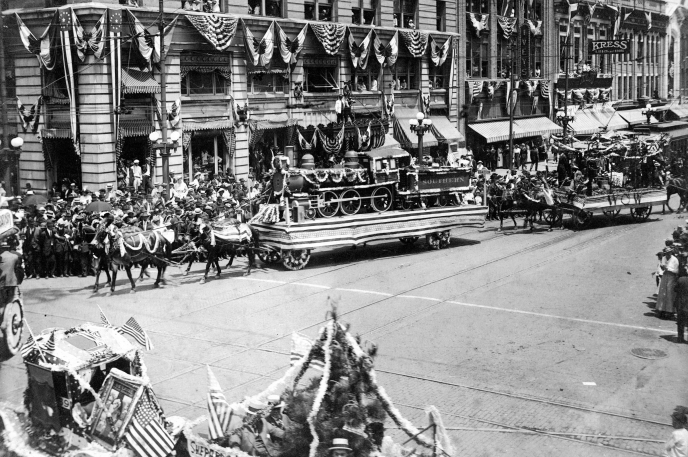
Meck Deck Parade in the 1920s. Held every year on the 20th of May, the celebration of the Mecklenburg Declaration preceded the importance of the Declaration of Independence.

Happy Independence Day from Charlotte, NC!

July 1, 2019

For many Americans, July 4 is synonymous with Independence Day. However, in one North Carolina county, Independence Day comes early, on May 20 to be exact.

Beginning in 1825, the residents of Mecklenburg County celebrated the writing and signing of the Mecklenburg Declaration which supposedly took place on May 20, 1775, a full year before the more famous Declaration of Independence. Over the next century, May 20 was the time when residents set off countless fireworks, dined at celebratory dinners at churches, civic organizations and fraternities, held picnics, conducted parades as well as patriotic pageants and hosted dignitaries, including four United States Presidents.

By the time July 4 came around, there was very little enthusiasm to organize and prepare for another massive celebration. Except for the occasional private affairs and individual public drunkenness, most Charlotteans celebrated the day either quietly in their homes or traveled to nearby towns where the activities were in great abundance. This continued for almost 125 years.

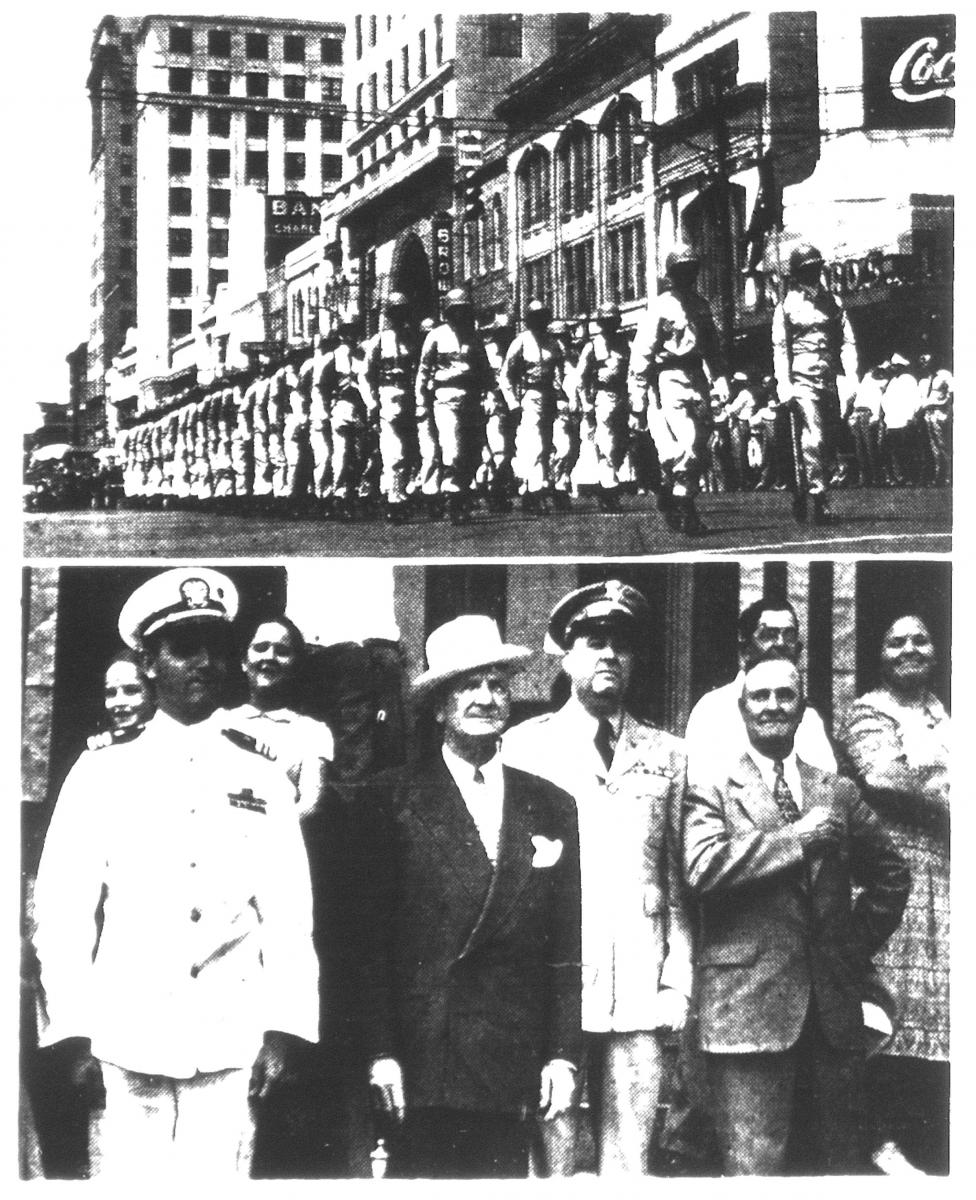
During World War II, local officials began to encourage citizens to organize events to celebrate the fourth of July. In 1949, under the leadership of the local chapter of Disabled American Veterans, Charlotte held its first American Independence Day parade. 5,000 people filled the street to watch the Plato Price High School Marching Band and cheered when they played “Stars and Stripes Forever.” Also, in attendance were members of the 504th Airborne, veterans from the Spanish American War, members of a local cavalry club to honor World War I Veterans, and several trained goats. Twelve planes from the Air National Guard flew high over the city in special formation. Former WWI nurse and “DAV Sweetheart, Minnie Gwaltney was also honored for her continued care of veterans. Thus, began a new tradition in Charlotte.

For more information about Mecklenburg Independence Day celebrations, see: https://www.cmstory.org/exhibits/mecklenburg-declaration-independence/mecklenburg-declaration-independence


Picture of July  parade from the July 5, 1950 Charlotte Observer.

Thumbnail
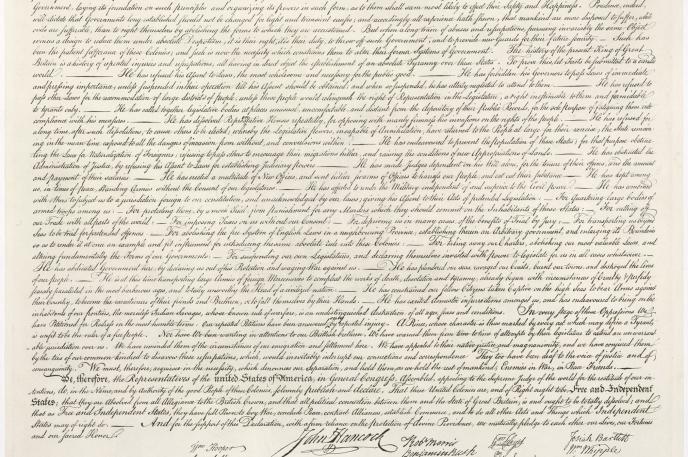
The Declaration of Independence

How July 2 almost became Independence Day

July 2, 2019

Yes, you read that right!  

The legal separation of the Thirteen Colonies from Great Britain in 1776 actually occurred on July 2, when the Second Continental Congress voted to approve a resolution of independence proposed by Richard Henry Lee of Virginia. Lee made three main points, to include a declaration of independence, a call to form foreign alliances and a “plan for confederation”: 


Lee’s Resolution, June 7, 1776 (National Archives and Records Administration: 301685 )

After approving Lee’s Resolution, Congress turned its attention to The Committee of Five’s drafted statement of independence. The Committee met and wrote what became the Declaration of Independence between June 11-28. Thomas Jefferson, John Adams, Roger Sherman, Robert Livingston, and Benjamin Franklin all served on the Committee, with Thomas Jefferson leading as the principle author.  On July 2 the document was approved, and by July 4, 1776 Congress agreed on the final wording, thus leading to the official adoption of the Declaration of Independence. 


The Committee of Five (National Archives and Records Administration: 532924 )

So, should we celebrate July 2 as our actual day of independence? It seems that John Adams thought so. He wrote to his wife Abigail: 

“The second day of July 1776 will be the most memorable epoch in the history of America. I am apt to believe that it will be celebrated by succeeding generations as the great anniversary festival. It ought to be commemorated as the day of deliverance, by solemn acts of devotion to God Almighty. It ought to be solemnized with pomp and parade, with shows, games, sports, guns, bells, bonfires, and illuminations, from one end of this continent to the other, from this time forward forever more.” 

Portrait of John Adams (National Archives and Records Administration: 50780435)

Adams's prediction of how Americans would celebrate this occasion was accurate, despite being off by two days. From the outset, Americans celebrated independence on July 4, the date shown on the much-publicized Declaration of Independence, rather than on July 2, the date the resolution of independence was approved in a closed session of Congress.  

The signers of the Declaration of Independence were not all present on July 4, 1776, although Thomas Jefferson, John Adams, and Benjamin Franklin did write that they signed it the same day the document was approved and adopted. Other members of Congress, led by John Hancock, the President of the Congress, signed the Declaration nearly a month later on August 2. 

The King of England viewed the members of the Second Continental Congress as traitors, rebelling against the crown. None of the signers were sentenced to death in response to their rebellious actions, but most were punished indirectly through the burning of their homes, imprisonment, or physical harm. 

Oddly, both John Adams and Thomas Jefferson, the only signers of the Declaration of Independence later to serve as Presidents of the United States, died on the same day: July 4, 1826, which was the 50th anniversary of the Declaration. 

  ----

Sources:  

Massachusetts Historical Society. Letter from John Adams to Abigail Adams, 3 July 1776. Accessed July 2019. https://www.masshist.org/digitaladams/archive/popup?id=L17760703jasecond&page=L17760703jasecond_2   

National Archives and Records Administration. Declaration of Independence. Docs Teach. Accessed July 2019. https://www.docsteach.org/documents/document/the-declaration-of-independence 

National Archives and Records Administration. Lee’s Resolution. Docs Teach. Accessed July 2019. https://www.docsteach.org/documents/document/lee-resolution-independence  

Thumbnail
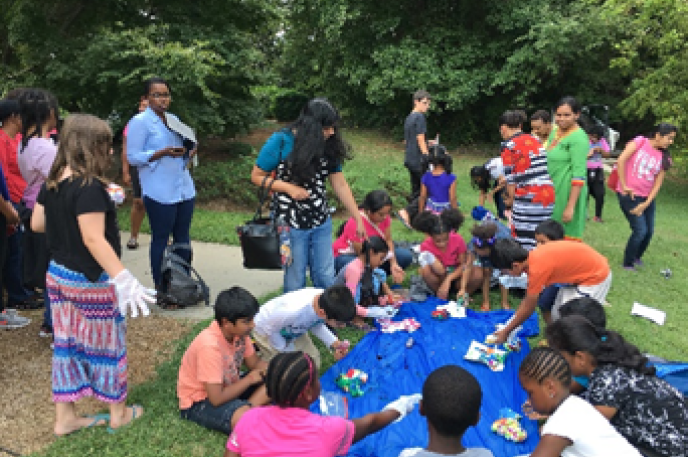
A Summer Break activity with the Charlotte Mecklenburg Library.

Summer Break begins to wrap up

August 9, 2019

Another summer has flown by. School supply shopping has begun, vacations are winding down and another Summer Break program is about to end.  

Remember that Saturday, August 10 is the last day that you can enter reading time or activities in your log. Participants will have until Saturday, August 17 to pick up their milestone incentives – while supplies last. As a reminder, the incentives are as follows:  

  • Wendy’s Jr. Frosty Coupons (earned at Sign-up)  

  • Fine Waiver cards (earned at Sign-up, 10 hours, 15 hours, and 20 hours of reading)  

  • Summer Break Completion incentive (Babies/children: a book; Teens: choice of a book or a Library drawstring bag; Adults: a Library magnet or notebook.)

Some participants may noticed they have earned a “Giving Makes the World Go Round" badge. Participants earn this badge when they reach 25 hours of reading. Every summer, the library gives back to the community by donating books to a local organization in need. This year’s recipient will be Charlotte Mecklenburg Schools. Charlotte Mecklenburg Library is happy to donate to CMS and we are thankful the school system will accept the contributions.   

Thank you for participating in Summer Break! We hope you’ve had fun reading and learning all summer long. We’ll see you again next summer!!   


Thumbnail
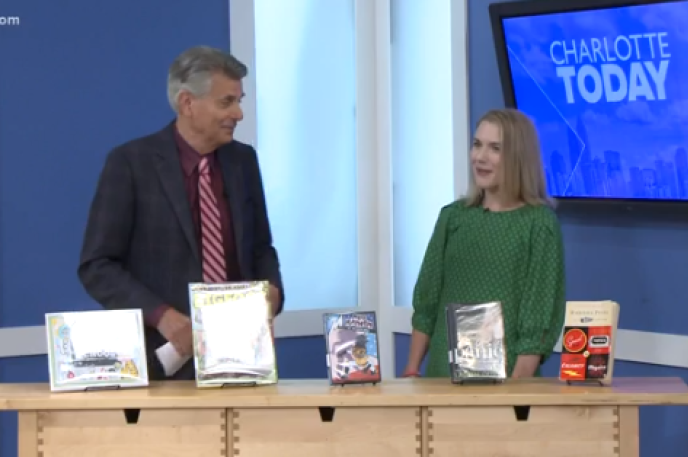
Charlotte Mecklenburg Library's Children's Services Leader, Jesse Isley, shares six back-to-school titles for kids, teens and adults.

Charlotte Today: Back-to-school books for every age

August 12, 2019

Children's Services Leader, Jesse Isley, made a guest appearance on WCNC's Charlotte Today on Monday, August 5, 2019 and shared six back-to-school titles for kids, teens and adults. 

Click here to search titles

Children’s picture books:

Your First Day of Circus School by Tara Lazar, illustrated by Melissa Crowton

Ladies and gentlemen, boys and girls of all ages! It's the most amazing day on earth: the first day of school! It can be a daunting prospect, but don't worry - your big brother can show you the ropes. Join a nervous boy and his enthusiastic older brother as they navigate the highs and lows of a first day at school . . . except this school is a big top, and the teacher is named Miss Stupendous, and the cafeteria can be a zoo, literally! It turns out, school isn't so scary when you can let off steam during recess (on a steam train) and walk on stilts to all of your classes. With a bit of help from family and some new friends, you'll make it to the top of the class in no time! This charming take on school readiness will delight new school-goers and take a bit of the fear out of those first-day jitters.

Back to School with Bigfoot by Samantha Berger and Martha Brockenbrough

The school year is about to start, and Bigfoot is worried about all the things that could go wrong--but he also remembers that all his friends will be there.


Youth fiction:

Mia Mayhem vs. the Super Bully by Kara West

Mia is excited about her first superspeed training class, but a bully on her relay team leads her to lose her shadow and, worse, to snap at her friends.


Teen fiction:

Panic by Lauren Oliver

In the poor town of Carp, New York, a group of teens enters a high-stakes game that involves a series of secretive, possibly deadly challenges throughout the summer, with the winner receiving more than $50,000--enough money to start a new life.


Adult fiction:

Special Topics in Calamity Physics by Marisha Pessl

A darkly funny coming-of-age novel and a richly plotted suspense tale told through the distinctive voice of its heroine, Blue van Meer. After a childhood moving from one academic outpost to another with her father (a man prone to aphorisms and meteoric affairs), Blue is clever, deadpan, and possessed of a vast lexicon of literary, political, philosophical, and scientific knowledge--and is quite the cinéaste to boot. In her final year of high school at the élite (and unusual) St. Gallway School in Stockton, North Carolina, Blue falls in with a charismatic group of friends and their captivating teacher, Hannah Schneider. But when the drowning of one of Hannah's friends and the shocking death of Hannah herself lead to a confluence of mysteries, Blue is left to make sense of it all with only her gimlet-eyed instincts and cultural references to guide--or misguide—her.

Thumbnail

A history of baseball in Charlotte

August 15, 2019

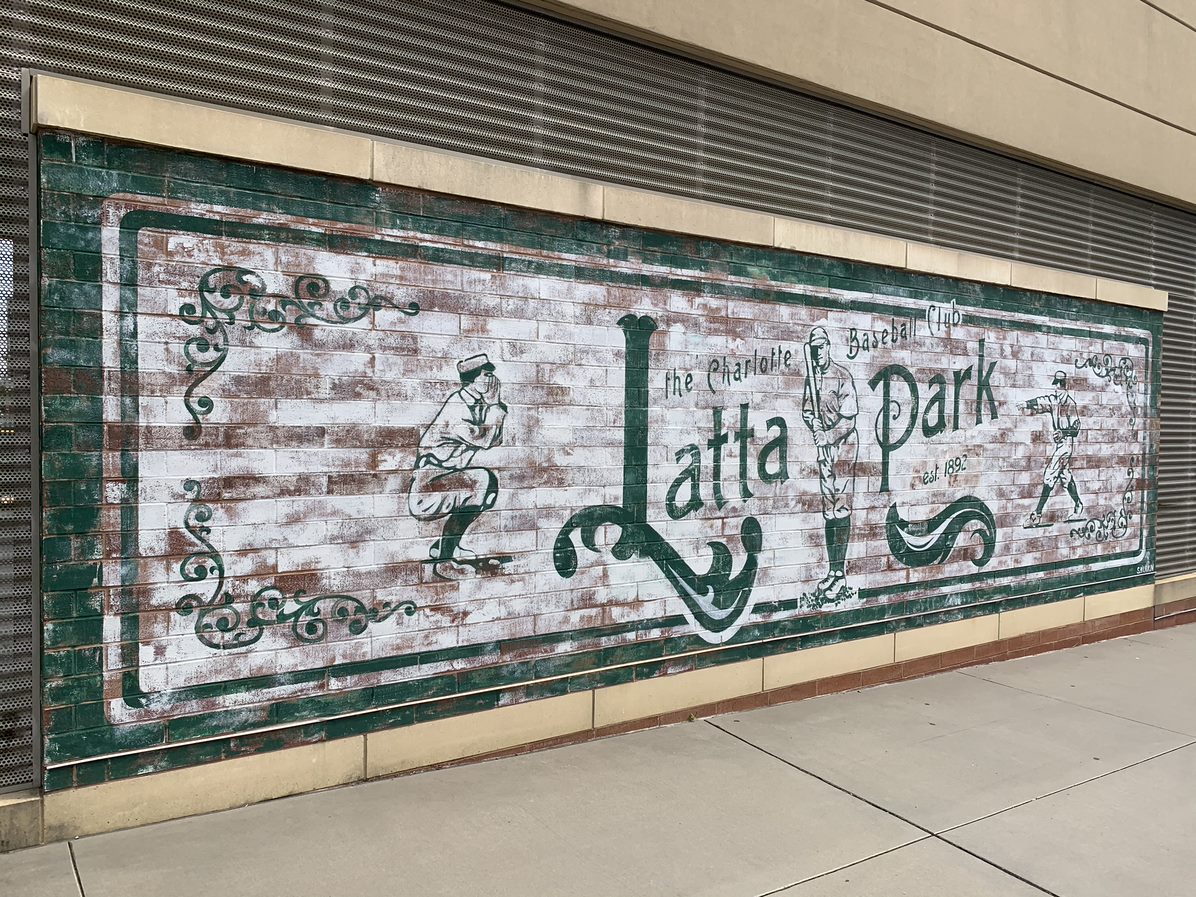
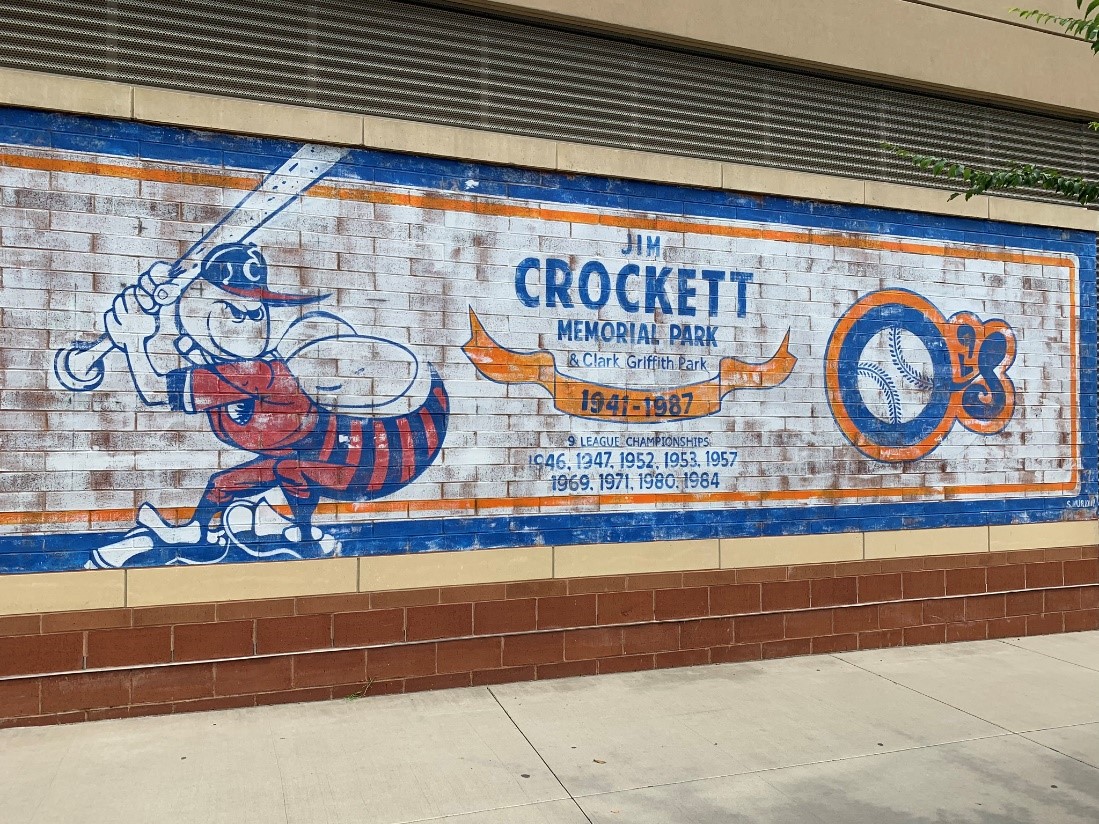
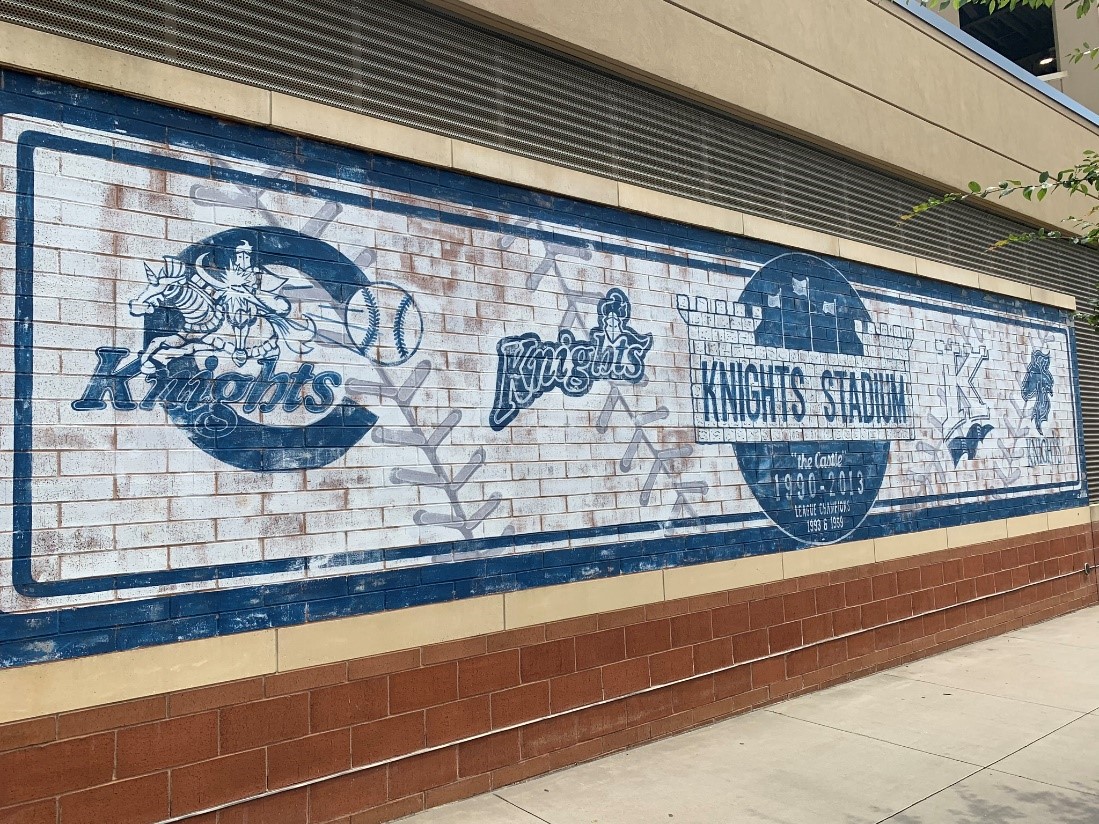
From radios in cars and TVs in restaurants comes the sound of baseball – the buzz of the crowd, the call of a vendor, the crack of the bat. In the 300 block of South Graham St., the wall of Truist Field (formerly BB&T BallPark) runs right along the sidewalk. Four images are painted on it in commemoration of past Charlotte baseball teams and fields.


Latta Park

A playing area for baseball was cleared in Dilworth, Charlotte’s first suburb.

The Charlotte Baseball Club challenged amateur clubs from other cities to games in Charlotte and accepted challenges from other towns. The team’s poor performance one year prompted this sardonic boast in the May 13, 1892 Observer: “There are people who say it can beat the Pineville nine, that is, if Pineville has a nine.”


Wearn Field/Hayman Park

The Wearn name commemorates a whole family. Joseph Henry Wearn and Company were in the lumber business. Members of the family formed “the Wearn Nine” as an amateur team. J. H. Wearn (1861-1936) became
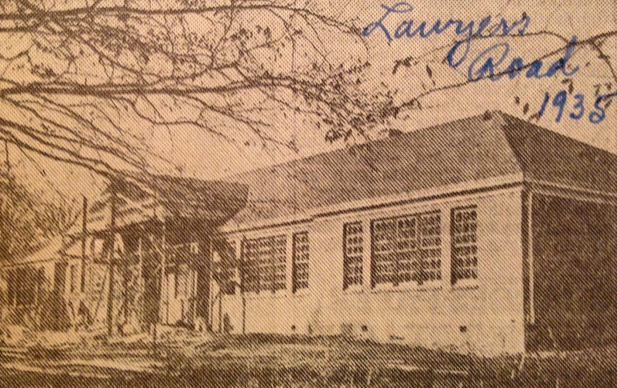
president of the first professional team in Charlotte and the field was named after him. The league it belonged to folded in 1917.

“Hayman” refers to Felix Hayman, the son of German-Jewish immigrants who, like his father, was a butcher (the family name was sometimes listed without the first “A,” indicating that the first syllable was pronounced with a long “I” sound). He restarted minor-league baseball in Charlotte by organizing the team for the South Atlantic, or “Sally,” League in 1919. Years after his death in 1932, people told stories about his baseball sense, his business flair and his charity work. The story goes that Felix once traded a turkey from his butcher shop for a player (Charlotte Observer, February 1, 1931, Sec.1, p.8).


Clark Griffith Park/Jim Crockett Memorial Park

In 1941, the Charlotte Hornets were acquired by Clark Griffith, owner of the Washington Senators, and began to play in a new stadium on 400 Magnolia Ave. in Dilworth. The Senators became the Twins and they pulled their minor league team out of Charlotte in 1972.

Charlotte went three seasons without a professional baseball team until the Baltimore Orioles relocated their AA farm team here in 1976. The stadium changed its name following the death of Jim Crockett, who had brought the team to Charlotte. His daughter, Frances Crockett, ran the team until 1987, seeing it through a fire that destroyed the wooden stadium in March of 1985. The Crocketts sold the team in 1987, which changed its name to the Charlotte Knights and moved to play in Fort Mill, South Carolina.

Buster Sloan served as groundskeeper at Griffith Park from its opening until his death in 1978. Sloan and family lived in an apartment under the bleachers. Fans could smell the chicken frying on their stove (Charlotte Observer, June 27, 1978).

Knights Stadium

Beginning in 1990, the Charlotte Knights began play in Knights Stadium in Fort Mill. In 1997, the team began its association with the Chicago White Sox and moved up to AAA affiliation, which remained the case to the end of their time in Fort Mill and into the uptown era as well.

Other Teams

Up to 1976, all these teams were called the “Charlotte Hornets,” and up to 1954, they fielded white players only. African American baseball players organized their own teams as early as 1876. (Charlotte Observer, July 2, 1876, p.4) The “Brown Hornets” shared Griffith Park with the other Hornets. Textile mill workers also organized their own baseball teams and leagues. The story of their so-called “Outlaw” League is told in an online exhibit of materials from the Robinson-Spangler Carolina Room of the Charlotte Mecklenburg Library.


Want to learn more about baseball in North Carolina? The Robinson-Spangler Carolina Room has the Hank Utley Baseball Collection. In this collection you will find interesting documents and artifacts that were used in Utley’s book about the notorious “Outlaw” baseball league that formed in the late 1930s. There are newspaper clippings, interviews, biographies, statistics and photographs/negatives.

Thumbnail
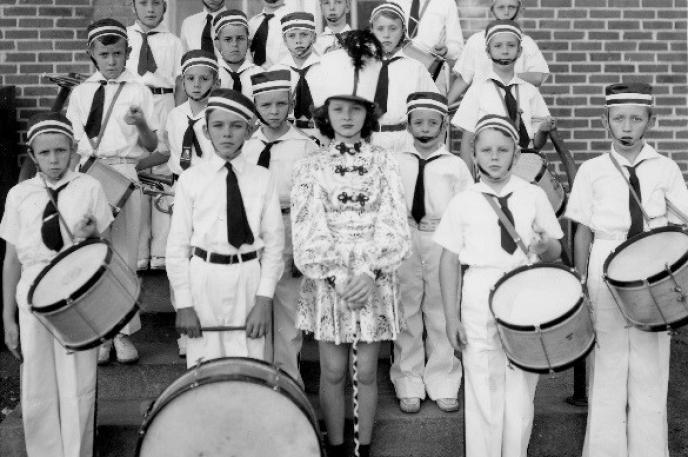
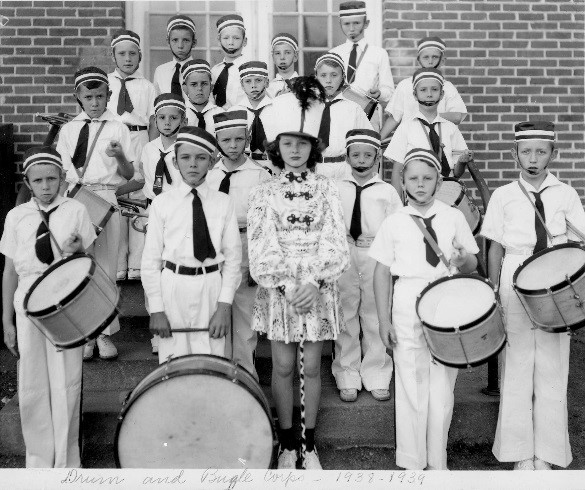
Midwood Elementary School, Drum and Bugle Corps, 1938-1939 Courtesy of the Robinson-Spangler Carolina Room

Behind the Vault Doors: Midwood Elementary School scrapbook

August 19, 2019

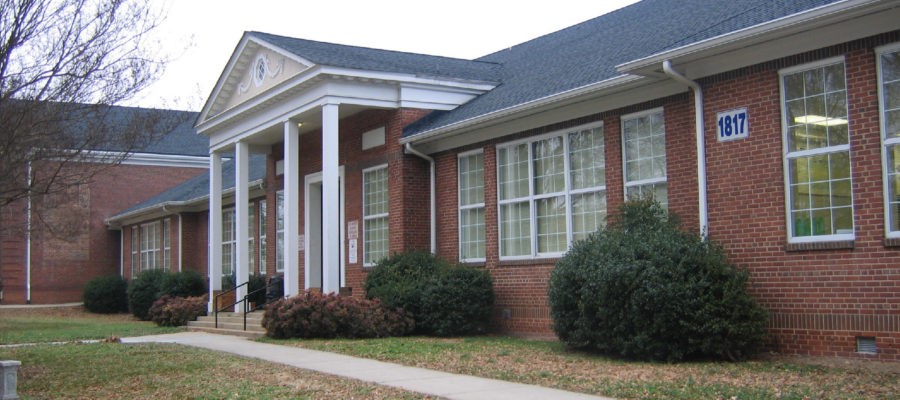
Midwood Elementary School was founded in 1934 and was located on 1817 Central Ave. in Charlotte, North Carolina. Midwood Elementary reached its prime years during the 1950s with 1,000 students enrolled. Several decades later in 1983, the school began to fall into disrepair and closed. After a 1985 arson fire at Albemarle Elementary, seventy workers brought Midwood Elementary back up to code in a speedy three days so children could attend a relatively-local school.


                               Midwood Elementary School, 1935

               Courtesy of the Robinson-Spangler Carolina Room


Midwood Elementary School, 2019

Courtesy of the Charlotte-Mecklenburg Historic Landmark Commission


By the early 2000s, Midwood Elementary was an alternative school for students who dropped out of traditional schools for academic or personal reasons. Another part of the building served as a hot lunch program for the elderly and was also home to Teenage Age Parents Services (TAPS), a group dedicated to keeping pregnant teen girls in school.


                                     Midwood Elementary School

                                Drum and Bugle Corps, 1938-1939

               Courtesy of the Robinson-Spangler Carolina Room


In 2012, the former Midwood Elementary School building became home to the International House. Founded by the Charlotte Area Clergy Association as the Community College and International Ministry of Charlotte, Inc. in 1981, the organization changed its name to “International House” in 1989. International House opened a multicultural campus to house Language Academy, League of Women Voters and All Ethiopian Community Center, among others. These organizations provided a variety of services, including direct services such as foreign-language conversation hours, cultural events, citizen workshops and legal services, to Charlotte’s growing international population.


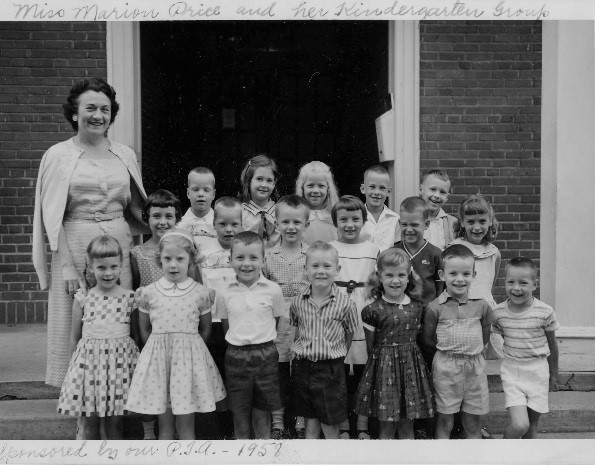
         Midwood Elementary School, Miss Marion Price and her

               Kindergarten Group, Sponsored by our PTA, 1958.

              Courtesy of the Robinson-Spangler Carolina Room


This scrapbook provides patrons a look back at Midwood Elementary during its active years. Clippings celebrate student and staff achievements and thank you notes show how much Midwood’s teachers were appreciated.

To learn more about Midwood Elementary, the Midwood scrapbook, and our other collections, please visit us at www.cmstory.org/ or on the third floor of Main Library.