

Celebrate National Sensory Awareness Month this October with Library resources
October 13, 2022
This blog post was written by Jennifer Williams-Cannon, Librarian for Charlotte Mecklenburg Library.
Spreading awareness about Sensory Processing Disorder (SPD) and how it affects children and adults can bring answers and solutions to those that have difficulty processing sensory input. Charlotte Mecklenburg Library offers an impressive collection of resources for those living with SPD, their parents, educators, and professionals. There are numerous tools in a variety of formats which include books, eBooks, audiobooks, and DVDs. Click on the link to view our recommendations for National Sensory Awareness Month.
Sensory Awareness Books for Children
Sensory Awareness Resources for Parents
What is Sensory Processing?
Sensory Processing Disorder affects the nervous system and interferes with the body's ability to receive messages from the senses. Sensory processing issues arise when these messages are misinterpreted, resulting in difficulties organizing and processing everyday environmental stimuli. This includes our traditional, five senses of sight, touch, taste, hearing, and smell. However, we also have proprioceptive (sensations from the muscle and joint movements within our bodies) and vestibular sensory systems (feeling of our bodies in relation to the space around us). Our bodies are constantly receiving sensory information, processing the input, and adjusting our responses, without us even realizing this is happening. Sensory Processing Disorder affects this series of events, causing difficulty responding to the incoming messages throughout the day.How does Sensory Processing Disorder affect people?
Sensory Processing Disorder can disrupt a person’s everyday life, especially with motor and behavioral functions. Seemingly routine activities can be more difficult. Sensory overload can affect attention span, coordination, and impulsivity as an individual tries to regulate the sensations they feel. Symptoms of Sensory Processing Disorder, like those of most disorders, can occur within a broad spectrum. While most of us have occasional difficulties processing sensory information, for those with SPD, these difficulties could significantly unsettle a person’s everyday life. Listed below are some examples of behaviors:
Sensory-avoidant behaviors could include:
- Difficulty with haircuts, washing or brushing hair
- Difficulty with grooming, tolerating baths, washing face, trimming nails
- Uneasiness with brushing and flossing teeth
- Acute awareness of background noises
- Refusal to wear certain clothing, often pulling or tugging on the clothing
- Upset by unexpected touch
- Very cautious, not willing to take risks
- Difficulty tolerating a loud, crowded environment
- Prefer stationary activities – avoids running, climbing, jumping, etc.
- Picky eaters-food sensitivities
- Gagging to certain food smells or textures
Sensory-seeking behaviors could include:
- Standing too close to others when speaking (having a hard time understanding personal space)
- Difficulty with balancing, following a sequence of movements (ex. “Simon Says” game)
- Constantly chewing on non-food items (ex. clothes)
- Enjoying loud noise when it is inappropriate
- Stomping or dragging feet when walking (coordination challenges)
- Enjoying bumping or crashing into others (prefers lots of “rough play”)
- Unnecessary roughness with toys, ripping paper
- Poor fine motor skills, difficulty with handwriting
- Providing pressure or squeezing certain parts of the body
For more information about National Sensory Awareness Month, check out the Sensory Processing Disorder Foundation by visiting https://www.spdfoundation.net/

Source: Sensory Processing Disorder Foundation https://www.spdfoundation.net
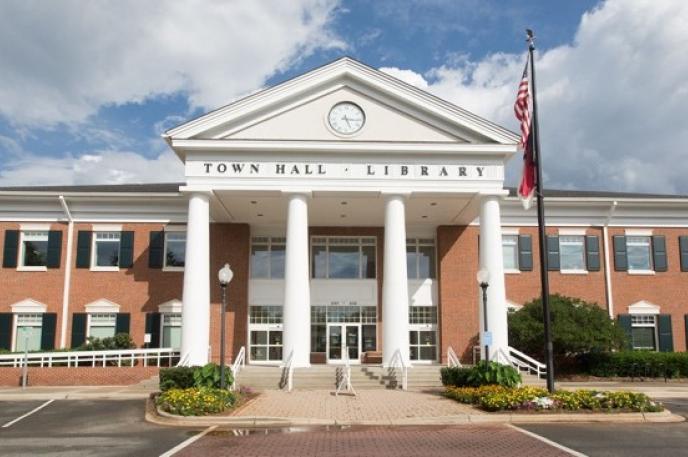
 The new adult fiction and nonfiction sections are the first things that greet patrons as they walk through the front doors, along with several themed displays. The children’s area is to the right, including a play area and plenty of seating. The community room, which hosts many of the branch’s programs, is located in the back right corner of the library. Several shelves between the community room and the reference desk are home to the world language collection, which includes books in Spanish, Chinese, French, Gujarati, Hindi, Japanese, Korean, Telugu, Russian, German, and Vietnamese. Some of the Matthews staff are also able to communicate with patrons in Spanish, French, German, Hindi, Urdu, and American Sign Language.
 Seating can be found throughout the library, ranging from tall, café-style tables to comfortable armchairs. Public computers are also available for use in the computer lab in the back of the branch and throughout the building. The Matthews library is also known for its fireplace! In the winter, pick out a good book and curl up in a squashy armchair by the roaring fire.
 Over Labor Day weekend, downtown Matthews is shut down for the annual
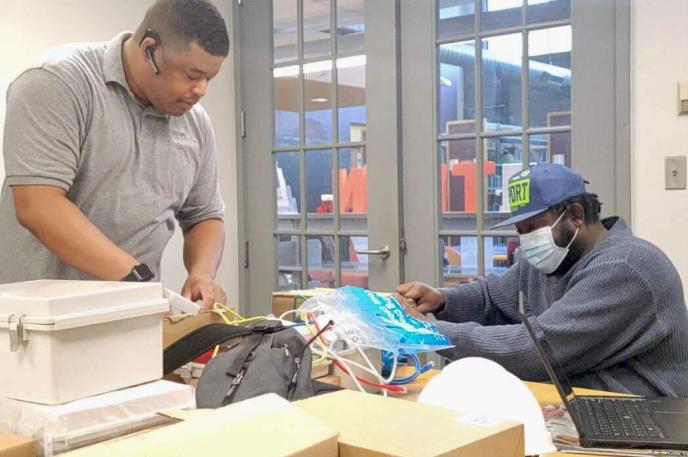
 The Library’s efforts to lead in digital equity are matched by their partnership with Open Broadband, an essential partner as the internet service provider for MeckTech Connect. They are a regional internet service provider that contributes to underserved communities. Work on the MeckTech Connect infrastructure is currently underway in the West Boulevard community. In addition to the partnership with Open Broadband, the Library was awarded a grant and funding from the

 Within just a couple of miles from the library, this community has two Spanish language immersion education programs.
  East Charlotte is also home to the