Wait time for new book arrivals may increase. Learn more

240 of 1133 results
Thumbnail
Josephine Justin, a former Charlotte Mecklenburg Library intern, student at the University of North Carolina at Charlotte and immigrant to the United States, shares the significance of libraries on  her life.

Libraries are havens of hope, learning and love

November 25, 2019

For as long as I can remember, I’ve always enjoyed reading. My earliest memories are those I’ve spent at the library. From dressing up as a bumblebee for a Halloween event to making many different arts and crafts projects with my mother, the library has always felt like a home away from home.  

Born in a seaside fishing town in Tamil Nadu, India, I moved to America with my family when I was a couple of months old. I’ve spent almost 19 years of my life moving from one state to another, from Colorado to New Jersey to Virginia to finally settling down in Charlotte, North Carolina. Each new place meant a new library card. 

The library wasn’t just a building to me as a child, it was a palace filled with endless worlds of stories and possibilities.  

As I grew older, the library became a place for me to not only check out books, but to study with my friends. I spent most days after high school at the South County Regional Library studying with my best friend in the teen area. While there may have been more moments of laughter than studying, I’ve always appreciated how the library caters to every season and stage in our lives.  

From reading Thunder Cake by Patricia Polacco to Beloved by Toni Morrison, the books I’ve checked out at the library throughout my life have allowed me to step into different realities and become a more understanding and empathetic person.  

Looking back at my childhood as an immigrant, I can see the important role the library played during those developmental years in providing a welcoming environment for my family and I in a new country.  

Every trip I’ve made back home to visit my relatives in India, my suitcases have been packed with books but on my trip this past summer I was able to utilize the library’s e-books. While I absolutely love my hometown in India, it is disheartening to see that many places in India do not have the same public library facilities that are in America. 

Recently, books I have borrowed from the library, such as A Place for Us by Fatima Farheen Mirza, have allowed me to better understand my life as a minority in America caught in the middle of two drastically different cultures. In the future, I hope to be a part of creating a public library space in my hometown for people of all ages and backgrounds to discover new books and become lifelong learners.  

If I were to visit all the towns I grew up in, I would have to stop by the libraries because of how many memories it would bring back. I’m thankful for my parents who have spent countless hours in these libraries with me and my brother.  Without my parents, I wouldn’t be the book lover I am today.  

Being a fall 2019 marketing and communications intern at the Charlotte Mecklenburg Library has been a full-circle experience for me because I get to give back to an institution that has given me so much.  

The columns in front of the Main Library building showcase quotes on reading and learning from famous people across time. On the first day of my internship, I read a quote on one column by John Grisham that said “The first thing my family did when we moved was join the local church. The second was to go to the library and get library cards.” As I moved from state to state over the past couple of years, this has been true for my family, too. 

The library is a haven where I have spent countless hours reading and spending time with the people I love. I know in the future, that wherever I go, the library will continue to be that for me.   

--

This blog was written and posted with permission by Josephine Justin, student at the University of North Carolina at Charlotte. 

Do you or someone you know have a story of impact to share with the Charlotte Mecklenburg Library? Please email our Marketing & Communications Specialist, Asha Ellison, at [email protected].
Thumbnail
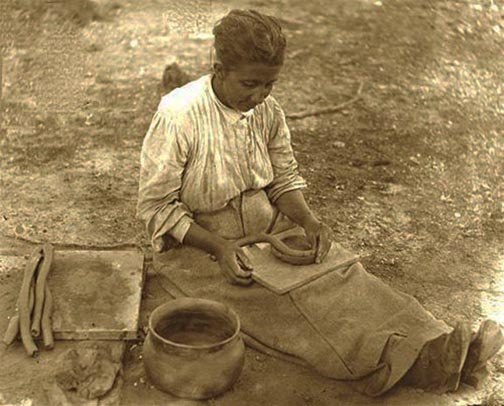
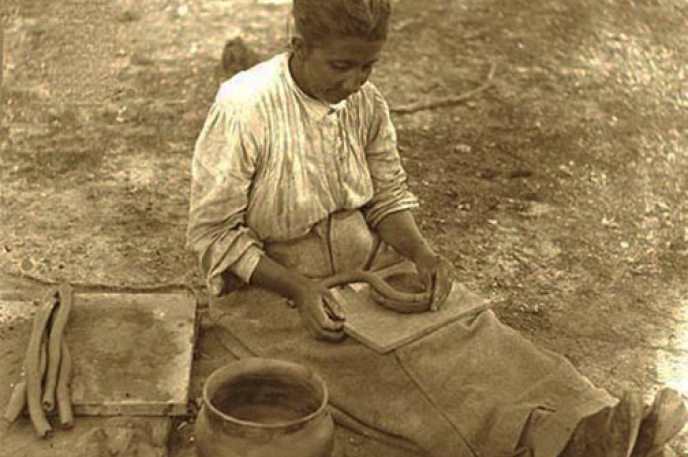
A Catawba potter. The Charlotte Mecklenburg Library's Robinson-Spangler Carolina Room looks at the history of Native Americans in North Carolina.

A history of Native Americans in North Carolina

November 25, 2019

Did you know that November is Native American History Month? Keep reading for a brief history on Native Americans in North Carolina and learn how the tribes made their way to the “Tar Heel” state.


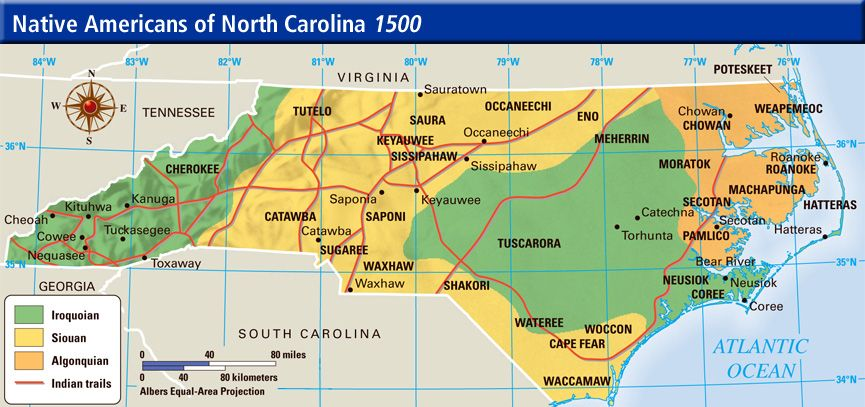
Map of Native American Tribes in North Carolina

Paleoindian Period

The oldest Native American cultural period in North Carolina is the Paleoindian Period. The Paleoindian Period occurred around 10,000 BCE during the Ice Age. Native Americans were nomadic, so they had limited possessions and their access to temporary shelter made travel easy. Since they lived during the Ice Age and many large mammals were close to extinction, Native Americans who lived at the time relied on smaller woodland mammals for food. In order to hunt and gather, spears were created as hunting tools and baskets were made to store food. The oldest spear found is called Clovis, which dates between 9500-8500 BC. It was slender with a long flute to attach the spear. Around 8000 BCE another spear, the Hardaway-Dalton, was created. It did not have a flute, but there were shallow indentations on each side of the spear by the base.


 Arrowheads


Archaic Period

Native Americans who lived during the Archaic Period used similar tools as the people in the Paleoindian Period did, but changes in diet and hunting were made. The archaic period lasted from 8000 BC-1000 BC, when groups of 25-100 native peoples came to North Carolina. These groups moved during each season and lived near the floodplains. Native peoples living during this time hunted deer, aquatic animals and other small game. The invention of the atlatl, or spear, allowed them to launch it forcibly and far to hunt. Plants were used for medicinal purposes. Stone tools were made to use as jewelry, decorative pins, grooved axes, balancing weights called balance stones for atlatls, fishhooks and awls. Later, they started weaving baskets.


Catawba potter coiling


Woodland Period

The Woodland period brought changes in shelter, weaponry,and interaction with other tribes from different states. Archeologists debate how long this period lasted. Many believe that the Woodland Period started in 1000 BC and ended when the Europeans came around AD 600. This period brought the manufacture of clay pots, semi-permanent villages, gardens and settlements occupied by people for several months a year. Styles of pots are adopted from contact with other places such as Ohio and Tennessee. Populations began to increase and wild animals were still hunted as the main sources of food. Pottery styles started to spread through North Carolina with designs that allowed the pottery to also be used for cooking. As for weaponry, the bow and arrow replaced the atlatl, which enabled hunters to hunt more effectively and efficiently. When burying loved ones, members commonly began to include personal artifacts with the body.


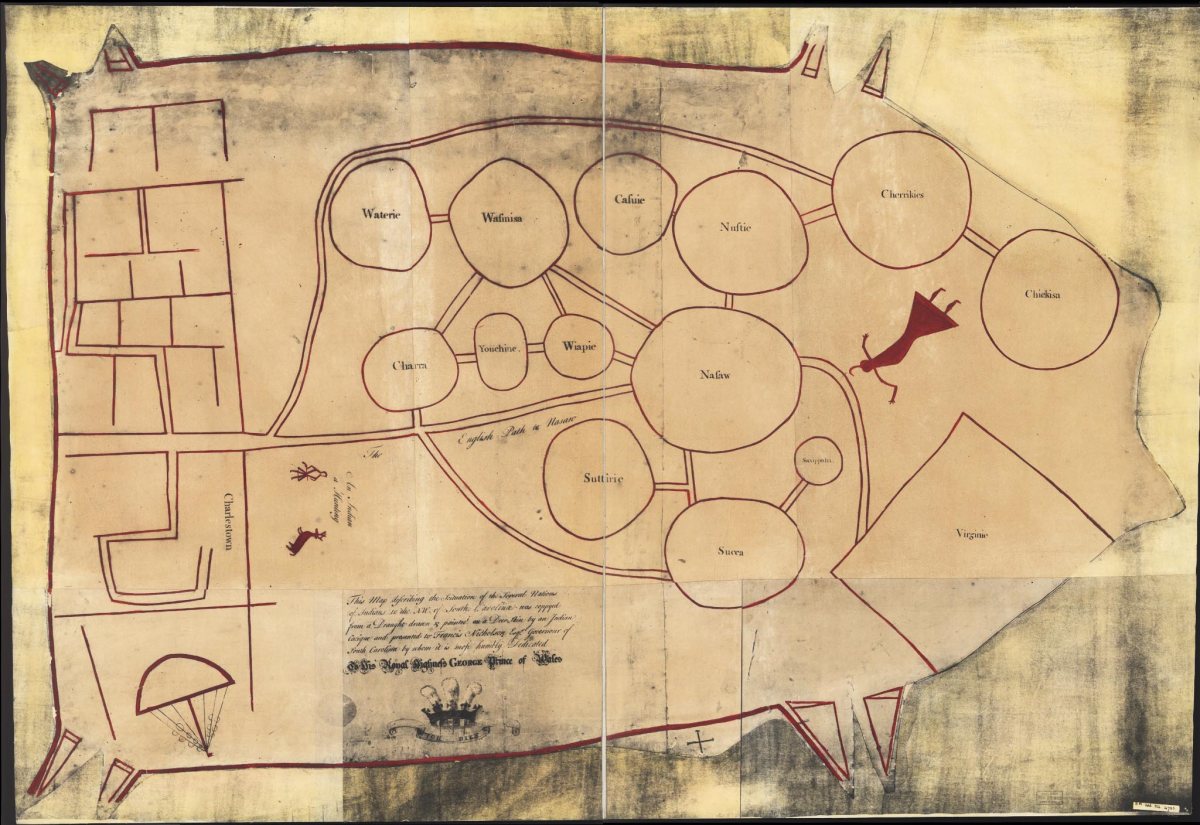
Catawba map

Mississippian or Late Woodland

Religious and ceremonial practices, a new diet, and hierarchies were brought into the Mississippian or Late Woodland Period. This period took place largely in the Piedmont and mountain areas of the Carolinas. It takes place in 8000-1000 BCE. Native Americans in this time ate more corn, squash, and beans as opposed to meat. More modern and permanent homes were built in squares and rectangles. In the Piedmont region houses were oval. Many platform mounds (earthen mounds on top of burned remains of ceremonial lodges) were used for religious and political purposes. Complex pottery styles with intricate designs were used to hold and cook food, as well as for urns. Organization of the social hierarchy also took place during this period.

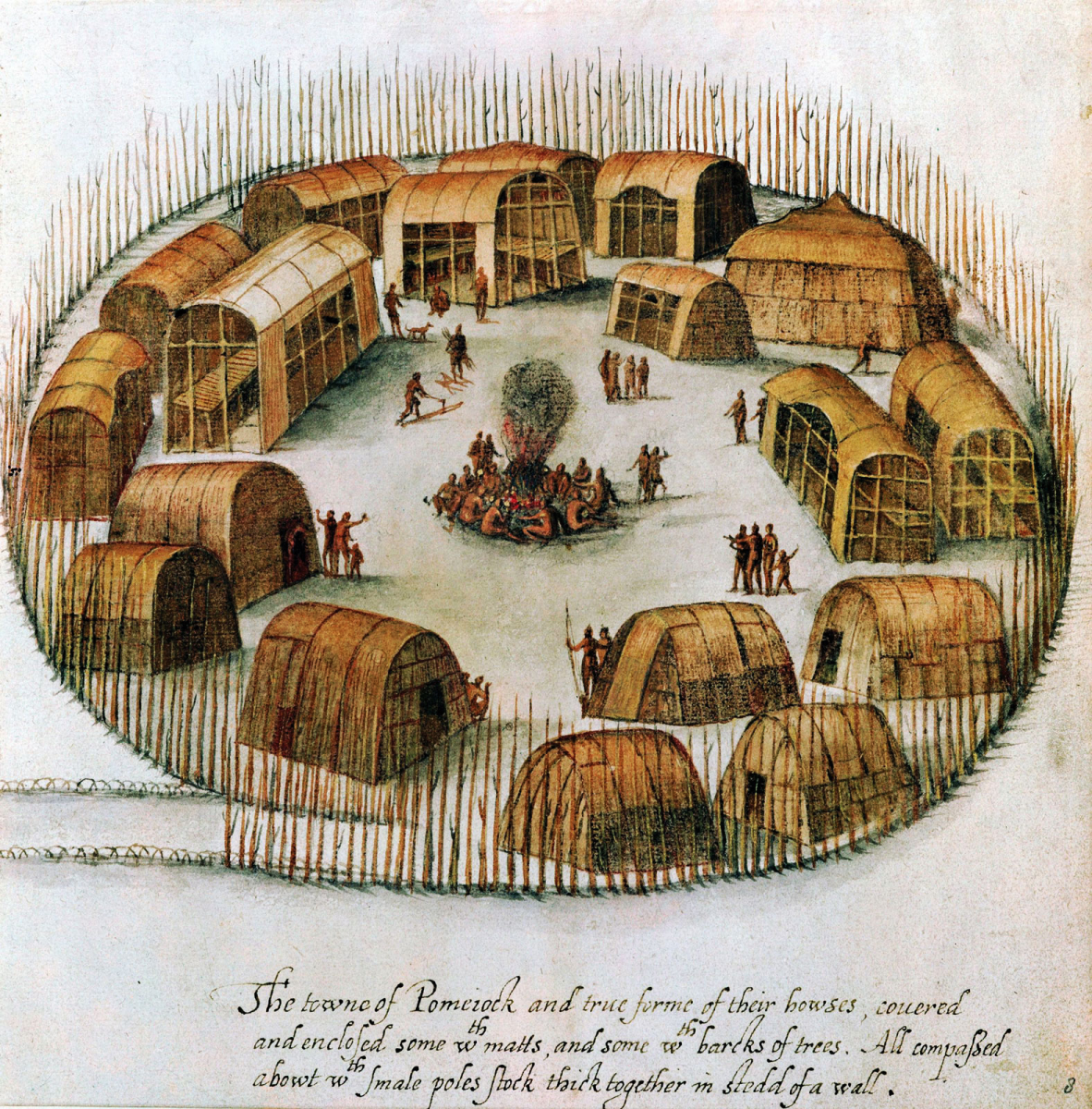
The village of Pomeioc, North Carolina, 1585

Courtesy of the National Archives Records Administration, 535753

Battles

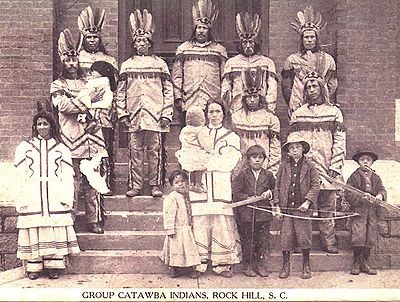
Due to conflicts, changes in weather and diseases; populations began to decline, and battles broke out between North and South Carolina tribes. The Catawba tribe, one of the most well-known tribes in North and South Carolina, fought with European settlers against the French, Spanish and British loyalists. Enemy tribes who fought with the French were the Iroquois, Cherokee, Shawnee and Algonquin. These battles led to expansion issues, decline of populations and slavery. The Tuscarora and Yamasee Wars resulted in the most devastating circumstance for many tribes. With colonial settlements close to the tribes, many Catawbas became captured by British and sold as slaves. The smallpox epidemic, weather, destruction of towns and the influx of refugees caused a population decrease.


Group of Catawba in Rock Hill, South Carolina

Reservations

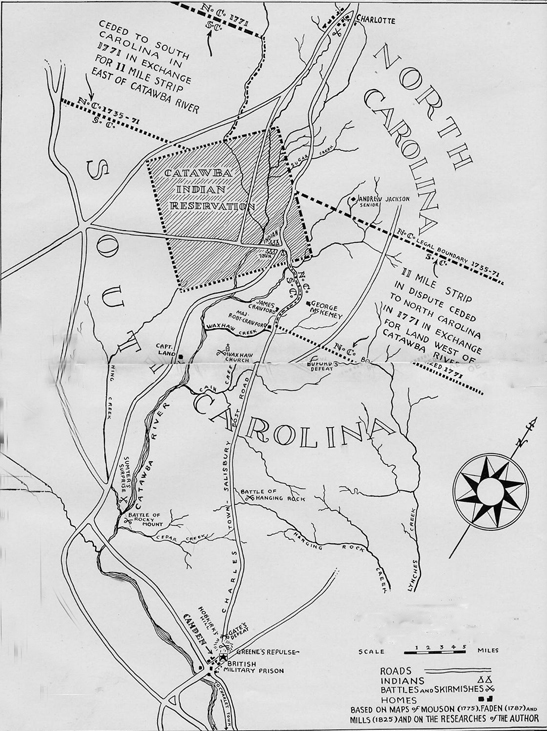
The Catawba Nation has a rocky history in the Carolinas. In 1759, the Catawba negotiated with the South Carolina government for a reservation in Rock Hill, SC. In 1760, 20 absorbed parts of tribes were in the area. In 1775, the Catawba fought against Cherokee and Lord Charles Cornwallis. Five years later in 1780, the English captured Charlestowne and the Catawba fled to North Carolina. By 1881, the Catawba returned to see their village destroyed. With a fear of their population soon to be extinct, the Catawba signed a treaty at Nation Ford to sell land to South Carolina, but this violated state laws. They went to North Carolina with a promise of land, but then the state refused to give them the promised land. The Catawbas then returned to South Carolina. In 1850 a 630-acre tract was selected on the west bank of the Catawba river in their old reservation. Catawba finally became a federally recognized tribe in 1973. In 2000, Over 2,200 Native Americans still live in Rock Hill.

Map of Catawba Indian Reservation


Federally Recognized Tribes

In order to become recognized as a tribe in North and South Carolina, there are rules and responsibilities required by the government. Federally recognized tribes are an American Indian or Alaska Native tribe entity that is recognized as a government-to-government relationship with the United States, with the with the responsibilities, powers, limitations, and obligations attached to that designation, and is eligible for funding and services from the Bureau of Indian Affairs. Treaties, acts passed by Congress, and presidential orders allow tribes to reach this status.

Native Americans have made countless sacrifices in their history. It is vital to recognize and respect their culture and celebrate its lasting beauty.

--

This blog was written by Julia Zwetolitz, marketing and communications intern with Charlotte Mecklenburg Library.

All photos are courtesy of the Robinson-Spangler Carolina Room unless otherwise specified.

Thumbnail
Join Charlotte Mecklenburg Library this November for fun, educational programs and activities in celebration of National Family Literacy Month.

Celebrate National Family Literacy Month with the Library

October 28, 2020

It’s November and Charlotte Mecklenburg Library is celebrating National Family Literacy month! According to the Handbook of Family Literacy, family literacy refers to the spoken and written communication within a family, as well as the family’s efforts to improve and support a child’s literacy and language development (Van Horn, 2012). It’s no secret that reading is beneficial for children, and families reading together is a huge indicator for schooling success. But what you may not know are the many ways you can improve literacy by involving the whole family! Check out these ten activities, programs and resources available at Charlotte Mecklenburg Library to support your family literacy (Note: they are available all year, not just in November!).

  1. Check out our curated reading lists by grade level and place books on hold to pick up at your local branch location! All Library locations are now open with expanded services, meaning your family can visit the Library to browse and check out books in person too.
  2. Utilize our digital e-book resources (hoopla, NC Kids Digital Library and OverDrive to name a few) to read on a screen with distant family members in a video chat session. (We do this daily through our Reading Buddies program.)
  3. Create pictures or puppets to bring stories you have read to life! Involving the whole family in retelling stories helps children understand how stories are developed and understand character responses.
  4. Visit five parks in Mecklenburg County and enjoy a StoryWalk ®.  StoryWalks® are opportunities for children and families to enjoy two great things - reading and outdoor spaces - at the same time. A StoryWalk® is literally taking apart a picture book, placing each laminated page in a weather-protected frame, and placing these frames in an outdoor space so that children and families can enjoy books in an outdoor setting. Get the whole family involved with special questions that are placed along the path for you to discuss as well!
  5. Utilize Active Reading to keep your reader engaged and to improve language, comprehension and vocabulary skills. Not sure how to use the practice of Active Reading? Sign up to take an Active Reading Training today.
  6. Text is all around if you look for it – on items of mail, newspaper articles, road signs, board game directions and more! Have younger readers go on a letter hunt for specific letters or letter sounds and invite older readers to read the text aloud and discuss the author’s purpose for writing the text.
  7. Use recipes for a tasty family literacy activity! Read recipes with your child and practice following directions as you complete each step. Check out these family recipe books if you need inspiration.
  8. Round up the whole family and participate in a virtual program with our Charlotte Mecklenburg Library staff! Story Explorers, Storytimes, and more are available on the calendar each week for you to register and receive a Zoom link to participate.
  9. Remember, literacy does not only involve reading, but also writing! Write a story about a special event that happened in your family or interview a family member about something that happened in the past and record responses. You may even want to create a family journal where the family can respond in writing to each other!
  10. We’ve saved the best for last! You are invited to Charlotte Mecklenburg Library’s inaugural Virtual Family Literacy Night on November 17, 2020 at 6 p.m. The whole family will enjoy singing, dancing, puppeteers and a few literacy tips along the way. All children that attend will receive a free coupon for a book and Frosty from Wendy’s! Sign up and learn with us.

Great literacy practices begin at home. When children see a parent or caregiver reading and writing, they are more inclined to place importance in reading and writing as well. We invite you to make Charlotte Mecklenburg Library an extended member of your family as we champion family literacy!

Thumbnail
Stay connected while staying home with virtual programming from the Library.

Virtual Programming from the Library - Week of 11/2/20

October 28, 2020

Did you know that you can continue to stay connected to the Library while staying home? How would you like to participate in a virtual storytime with your family or receive resume help all from the comfort of your couch? Join Charlotte Mecklenburg Library every week for a wide range of virtual programming for children, teens and adults. See a complete listing of this upcoming programming for the week of 11/2/2020 below. Click the corresponding links for more information and register for programs where applicable.

Learn more about online programming by clicking here


Monday 11/2

Family Storytime – 9:30 a.m. (Children's programming)  learn more

Book a Librarian - Nonprofit Services – 11 a.m. (Adult programming)  register

One-on-One Tutoring and Enrichment – 11 a.m. (Children’s programming)  register

Virtual Reading Buddies – 11 a.m.  (Children's programming)   register

Virtual Reading Buddies – 12 p.m.  (Children's programming)   register

Mindful Mondays - Guided Relaxation and Meditation – 12 p.m. (Adult programming)  register

Virtual Reading Buddies – 1 p.m. (Children's programming)  register

One-on-One Tutoring and Enrichment – 2 p.m. (Children’s programming)  register

Virtual Reading Buddies – 2 p.m.  (Children's programming)   register

Book a Librarian – Technology – 2 p.m. (Adult programming)  register

One-on-One Tutoring and Enrichment - 3 p.m. (Children's programming)  register

Virtual Reading Buddies – 3 p.m. (Children's programming)   register

One-on-One Tutoring and Enrichment - 4 p.m. (Children's programming)  register

Virtual Reading Buddies – 4 p.m.  (Children's programming)  register

Stronger Together: Support for your Job Search – 4 p.m.  (Adult programming)  register

One-on-One Tutoring and Enrichment - 5 p.m. (Children's programming)  register

Virtual Reading Buddies – 5 p.m.  (Children's programming)   register

One-on-One Tutoring and Enrichment – 6 p.m. (Children's programming)  register

Virtual Reading Buddies – 6 p.m.  (Children's programming)   register

True Crime Podcast Discussion Club – 7 p.m.  (Adult programming)  register


Tuesday 11/3        

Family Storytime – 9:30 a.m. (Children's programming)  learn more

Book a Librarian - Business Research – 11 a.m. (Adult programming)   register

Virtual Reading Buddies – 11 a.m.  (Children's programming)   register

One-on-One Tutoring and Enrichment - 11 a.m. (Children's programming)  register

Virtual Reading Buddies – 12 p.m.  (Children's programming)   register

Career Development Intensive Coaching – 12 p.m. (Adult programming)  register

Career Development Intensive Coaching – 12:30 p.m. (Adult programming)  register

Virtual Reading Buddies – 1 p.m.  (Children's programming)   register

Virtual Reading Buddies – 2 p.m.  (Children's programming)  register

Book a Librarian - Technology – 2 p.m.   register

One-on-One Tutoring and Enrichment – 2 p.m. (Children's programming)  register

One-on-One Tutoring and Enrichment – 3 p.m. (Children's programming)  register

Virtual Reading Buddies – 3 p.m.  (Children's programming)  register

One-on-One Tutoring and Enrichment – 4 p.m. (Children's programming)  register

Virtual Reading Buddies – 4 p.m.  (Children's programming)  register

One-on-One Tutoring and Enrichment – 5 p.m. (Children's programming)  register

Virtual Reading Buddies – 5 p.m.  (Children's programming)  register

One-on-One Tutoring and Enrichment – 6 p.m. (Children's programming)  register

Virtual Reading Buddies – 6 p.m.  (Children's programming)  register

Sparking Creativity for Teens – 6 p.m.  (Teen programming)  register


Wednesday 11/4

Family Storytime – 9:30 a.m. (Children's programming)  learn more

One-on-One Tutoring and Enrichment – 11 a.m. (Children’s programming)  register

Virtual Reading Buddies – 11 a.m.  (Children's programming)   register

Virtual Reading Buddies – 12 p.m.  (Children's programming)   register

Virtual Reading Buddies – 1 p.m. (Children's programming)  register

One-on-One Tutoring and Enrichment – 2 p.m. (Children’s programming)  register

Virtual Reading Buddies – 2 p.m.  (Children's programming)   register

Book a Librarian – Technology – 2 p.m. (Adult programming)  register

One-on-One Tutoring and Enrichment - 3 p.m. (Children's programming)   register

Virtual Reading Buddies – 3 p.m. (Children's programming)   register

One-on-One Tutoring and Enrichment - 4 p.m. (Children's programming)  register

Virtual Reading Buddies – 4 p.m.  (Children's programming)  register

One-on-One Tutoring and Enrichment - 5 p.m. (Children's programming)  register

Virtual Reading Buddies – 5 p.m.  (Children's programming)   register

One-on-One Tutoring and Enrichment – 6 p.m. (Children's programming)  register

Virtual Reading Buddies – 6 p.m.  (Children's programming)   register


Thursday 11/5

Family Storytime – 9:30 a.m. (Children's programming)  learn more

Book a Librarian - Business Research – 11 a.m. (Adult programming)   register

Virtual Reading Buddies – 11 a.m.  (Children's programming)   register

One-on-One Tutoring and Enrichment - 11 a.m. (Children's programming)   register

Career Development Intensive Coaching – 12 p.m. (Adult programming)  register

Career Development Intensive Coaching – 12:30 p.m. (Adult programming)  register

Parent Lunch & Learn: Bullet Journaling for Parents – 12 p.m.  (Adult programming)  register

Virtual Reading Buddies – 12 p.m.  (Children's programming)   register

Virtual Reading Buddies – 1 p.m.  (Children's programming)   register

Virtual Reading Buddies – 2 p.m.  (Children's programming)   register

Book a Librarian - Technology – 2 p.m. (Adult programming)   register

One-on-One Tutoring and Enrichment – 2 p.m. (Children's programming) register

One-on-One Tutoring and Enrichment – 3 p.m. (Children's programming)  register

Virtual Reading Buddies – 3 p.m.  (Children's programming)  register

One-on-One Tutoring and Enrichment – 4 p.m. (Children's programming)  register

Virtual Reading Buddies – 4 p.m.  (Children's programming)  register

One-on-One Tutoring and Enrichment – 5 p.m. (Children's programming)  register

Virtual Reading Buddies – 5 p.m.  (Children's programming)  register

One-on-One Tutoring and Enrichment – 6 p.m. (Children's programming)  register

Virtual Reading Buddies – 6 p.m.  (Children's programming)  register

Teens Live on Instagram: Career Conversation with Jonathan Reyes – 6 p.m.  (Teen programming)  register


Friday 11/6

Family Storytime – 9:30 a.m.  (Children's programming)  learn more

Virtual Reading Buddies – 11 a.m. (Children's programming)   register

One-on-One Tutoring and Enrichment – 11 a.m. (Children's programming)   register

Virtual Reading Buddies – 12 a.m. (Children's programming)   register

Mindful Friday- Meditation for Wellness – 12 p.m. (Adult programming)  register

Virtual Reading Buddies – 1 p.m.  (Children's programming)   register

Virtual Reading Buddies – 2 p.m.  (Children's programming)   register

Acing the Interview Process: What to do before, during, and after the interview – 2 p.m. (Adult programming)  register

Book a Librarian - Technology – 2 p.m.   register

One-on-One Tutoring and Enrichment – 2 p.m. (Children's programming)   register

One-on-One Tutoring and Enrichment – 3 p.m. (Children's programming)   register

Virtual Reading Buddies – 3 p.m.  (Children's programming)   register

Virtual Reading Buddies – 3:30 p.m.  (Children's programming)   register


Saturday 11/7

Family Storytime – 9:30 a.m.  (Children's programming)  learn more

Virtual Reading Buddies – 10 a.m.  (Children's programming)  register

Virtual Reading Buddies – 11 a.m.  (Children's programming)   register

Thumbnail
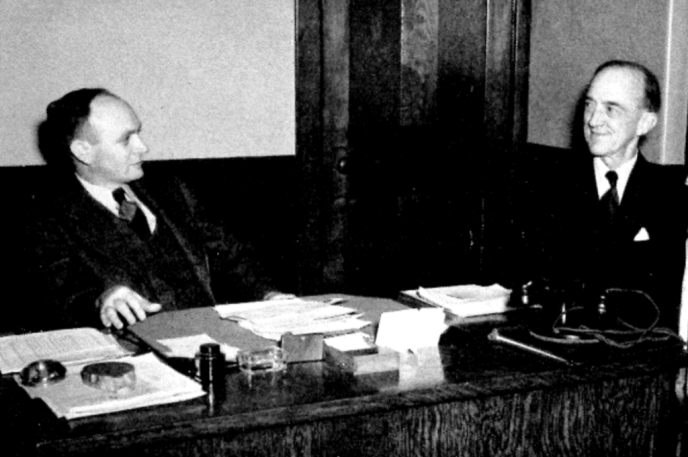
Harry Patrick Harding (right), 1941 courtesy of the Robinson-Spangler Carolina Room.

Behind the Vault Doors: Harry Patrick Harding Papers, 1917-1962

October 29, 2020

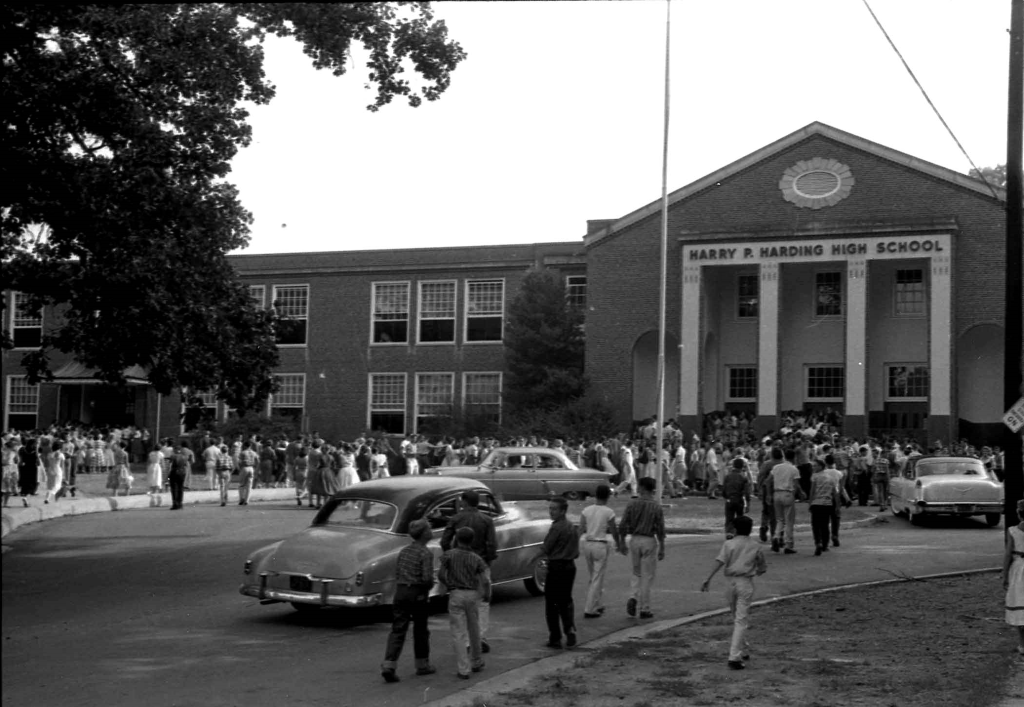
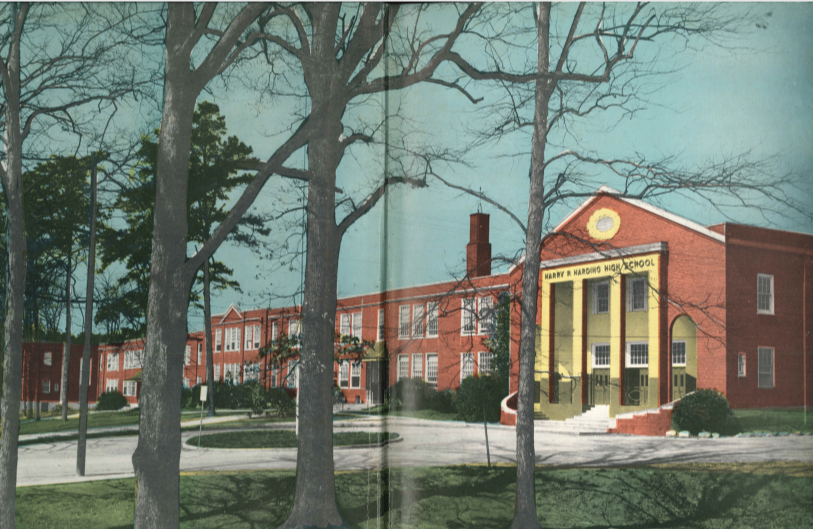
In 1935, Harding High School opened on Irwin Avenue. Its namesake was strongly against the use of his name, as he believed school buildings should not be named for living superintendents. However, the Parent Teacher Association (PTA) prevailed, and the school was named to honor Harry Patrick Harding (1874-1959) who served as the Charlotte School Superintendent from 1913-1949.  

The building remained a high school until 1961, when the Irwin Avenue building was designated a junior high school. The high school was moved to Alleghany Street, and was named Harding University High School the same year. The Irwin Avenue building later became an elementary school, and finally a Head Start Center. By the late 1980s, the building was demolished, except for the auditorium and gymnasium, and another structure was built to accommodate the Irwin Avenue Open Elementary School. 

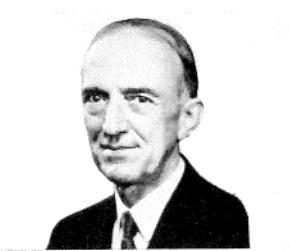
Harry Patrick Harding, 1940 

Born in Aurora, North Carolina, on August 14, 1874 to Confederate Army Major Henry H. and Susan Elizabeth Sugg Harding, Harry Patrick Harding was known for most of his life as “Harry” or “H.P.” He was one of eight children, although two died in infancy. Major Harding was a farmer and a delegate to the state House of Representatives during Harry’s early years. In 1885, the family moved to Greenville, where Major Harding became a teacher, and eventually spent four years as superintendent of the schools. Harry was educated at Greenville Male Academy and the University of North Carolina-Chapel Hill, where he graduated in 1899. In 1931, he received his Master of Arts degree from Columbia University, and an honorary doctorate from Davidson College in 1951. 

Courtesy of The Charlotte Observer, c1957 

After graduating from UNC, Harding became principal of New Bern High School. He left to organize the Oxford schools in 1901, but returned to New Bern as superintendent in 1902, and remained for two years. Then in 1904, Alexander Graham, superintendent of the Charlotte school system, recruited Harding to become principal of one of the graded schools. In 1912, Harding was appointed assistant superintendent, a position he held until succeeding Graham as superintendent the following year. Harding stayed in this position for 26 years, retiring in 1949. Following his retirement, he continued to maintain an office and visited schools as superintendent emeritus. 

Harding made great changes to the Charlotte school system during his tenure. He cared deeply about the students under his charge and was more interested in building the character and personality of a child, than teaching hard facts. Some of the strides Harding involved himself in included streamlining teaching in the high school by having teachers specialize in one subject; overseeing the first junior high school in North Carolina in 1923; adding elective courses to the curriculum to encourage and interest students in completing their educations; and persuading voters to approve special taxes and bonds in order to build better schools, supplement teachers’ salaries, and improve children's health. One of Harding’s most difficult challenges came in 1933-1934, when the state legislature annulled the charters that allowed cities to levy special taxes for the schools, which created huge deficits in the budget, loss of teachers, and reduction in instruction time. Harding was eventually able to get voters back on board in 1935, after approaching local businessmen to obtain their support.  

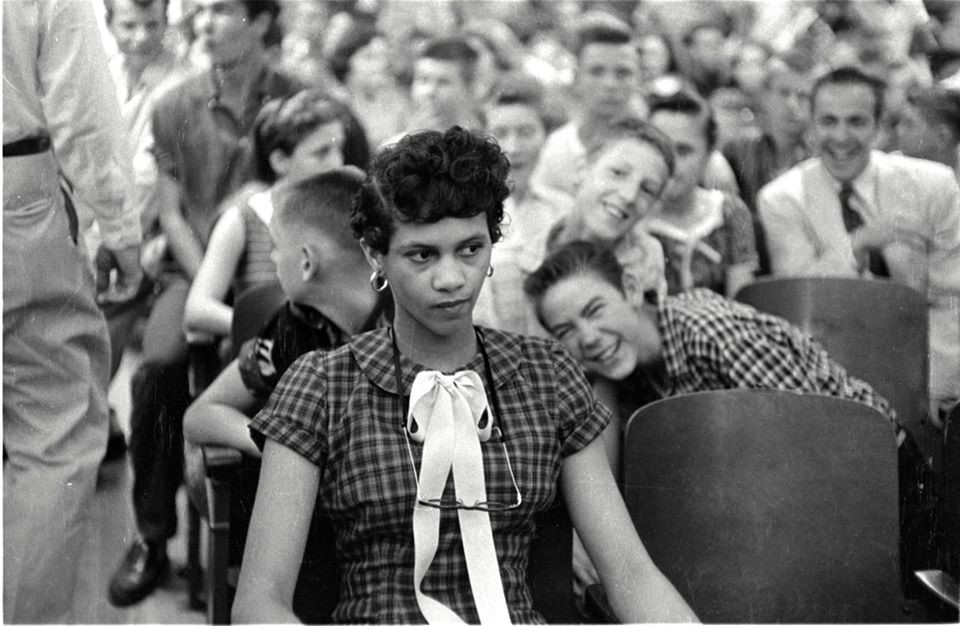
Dorothy Counts-Scoggins, first black student at Harding High School, 1957 

Despite the many positive contributions Harding made to CMS, he led a segregated system. CMS was segregated until 1957, when Dorothy Counts became the first black student to attend the all-white Harding High School. CMS largely continued to be segregated even after the Brown v. Board of Education ruling in May 1954. Until 1957, no black students attempted to attend an all-white school. Delores Huntley (one year at Alexander Graham Junior High), Girvaud Roberts (two years at Piedmont Junior High), Gus Roberts (graduated from Central High School in 1959), and Dorothy Counts (one year at Harding High School) all changed that in 1957 when they decided to enroll at white schools.  

By 1964, CMS had 88 segregated schools (57 white, 31 black), which ultimately led to one of the most significant court cases in our region’s history—Swann v. the Charlotte-Mecklenburg Board of Education. After many years of rulings, in 1970 Federal Judge James B. McManus ruled the CMS was not desegregated and demanded total integration.  


Harding High School, The Acorn, 1957 


In addition to his work as superintendent, Harding also served as a trustee of UNC, and was president of the North Carolina Association of City School Superintendents, of the South Piedmont Teachers Association, and of the North Carolina Education Association. He spent two summers teaching at UNC, served on the North Carolina High School Textbook Commission, and was a member of the Ninety-Six Club, which consisted of two superintendents from each state. Locally, he was a member of the Rotary Club, the Charlotte Chamber of Commerce, and the Executives Club.  

In his private life, Harding was a husband and father. He married Lucia Ella Ives (1876-1963) of New Bern in 1903. They had two children, Lucia Elizabeth (1908-1987), and a son, Harry P. Harding (1910-1911), who died in 1911 of ileocolitis, today known as Crohn’s disease, at just over a year old. The remaining five of Harding’s seven siblings held estimable positions as well. William Frederick Harding lived in Charlotte and was a Superior Court Judge, Fordyce C. Harding was a lawyer serving in the North Carolina Senate from 1915-1920, Jarvis B. Harding built roads in Mexico as a civil engineer, and their sisters, Sudie Harding Latham and Mary Elizabeth Harding, were teachers. 

Harry P. Harding died on July 13, 1959 of hypertensive cardiovascular disease. He is buried in Elmwood Cemetery in Charlotte, North Carolina.   

The Robinson-Spangler Carolina Room houses the Harry P. Harding Papers (1917-1962), which are only available for virtual research due to the COVID-19 crisis. Contact the Carolina Room’s Archivist for more information on how to access this collection: (704) 416-0150 or [email protected]

Thumbnail
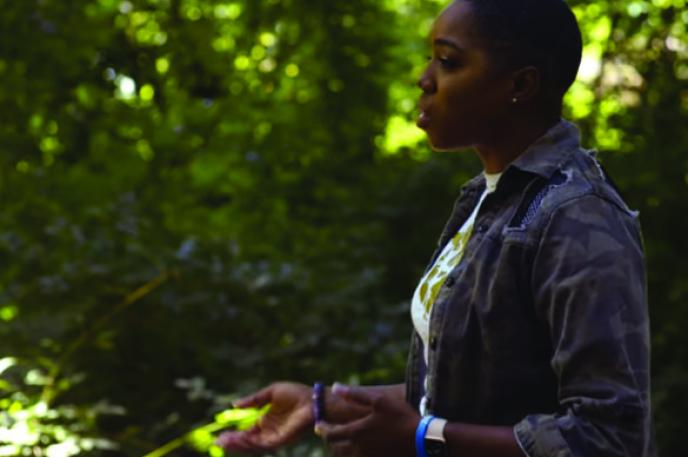
Pinnacle the Poet along with Black Ink Monks perform the spoken word Empower HER as part of the Charlotte Mecklenburg Library's Engage HER series.

Empower HER - Spoken Word featuring Pinnacle The Poet

November 2, 2020

Inheritance. I inherited my mother’s smile and her mother’s eyes. My mother’s ability to sway to a rhythm but struggle to stay on the 2s and 4s of the beat. I have inherited the ability to make a joyful noise but unsuccessful at harmonizing outside my own voice. The ability to create with my hands but not yet with my body. I have inherited her struggle. While I have inherited the will to move further than my mother and her mother and her mother’s mother, I have also inherited their intergenerational doubt.

Though doubt is the recessive gene, Uncle Sam does a good job of making sure it passes on to his unwilling victims. I must work harder; outwork my white counterparts to be heard and seen. Not too loud. Not visible. Not too intimidating. Just enough to grasp the scraps of Affirmative Action. Enough to be believable to them and me. Enough to power her and the ‘hers’ of tomorrow.

Pinnacle the Poet, along with Black Ink Monks, Johnson C. Smith University’s oldest-standing, non-Greek organization, provides us with a stinging verbal reality for Black women and the importance of voting. In the spoken word poem entitled EmpowerHER, Pinnacle the Poet, a 29-year-old Black woman, provides a gripping insight into what it is like to inherit fear and belief by being transparent and describing why she chooses this election year to vote for the first time in her life. The video also features commentary from Nicole Crump, who offers a summary of the statistics of Black women and their role, yet lack of representation, for the right to vote.

Written for Charlotte Mecklenburg Library’s, EngageHER: JCSU Edition event, the performance set the tone for the evening as we basked in the glory that is Black Girl Magic. The event was moderated by media personality “Chirl Girl,” with keynote speaker Congresswoman Alma Adams, Ph. D, and a host of influential women of color. EmpowerHER’s honest and revealing diction greatly summed up the evening by telling the familiar story of Black women as we celebrate the centennial of women’s right to vote – fighting for everyone else’s future while consciously placing ours in the backseat.

From Pinnacle the Poet depicting what it would have been like for her grandmother to vote at the age of 29, to Congresswoman Alma Adams, Ph.D. detailing her journey to public service after attending classes at North Carolina Agricultural and Technical State University (NCATSU), it was evident that Black women have something to celebrate after decades of constantly being left off of the ballot—the true definition of creating the table when no one offers you a seat. This poem serves as a great reminder that, while it is our duty to participate in something so basic, it is also our inherited responsibility to pursue change even when hope is bleak. 

Please enjoy this spoken word by Pinnacle the Poet and Black Ink Monks.


To see the full Engage HER with Johnson C. Smith University, click here.


In this election year, the Library is partnering with the Digital Public Library of America (DPLA) offering programs like this one to encourage everyone to look back at what has been accomplished in the past and to move forward with empowerment to make a difference in one's own community. To learn more about Engage 2020, click here.


This blog was written by Sabrina Robinson, Sr. Library Assistant - Teen Services at West Boulevard Library.

Thumbnail
Stay connected while staying home with online programming from the Library.

Online Programming from the Library - Week of 11/9/20

November 4, 2020

Did you know that you can continue to stay connected to the Library while staying home? How would you like to participate in a virtual storytime with your family or receive resume help all from the comfort of your couch? Join Charlotte Mecklenburg Library every week for a wide range of online programming for children, teens and adults. See a complete listing of this upcoming programming for the week of 11/9/2020 below. Click the corresponding links for more information and register for programs where applicable.

Learn more about online programming by clicking here

Monday 11/9

Family Storytime – 9:30 a.m. (Children's programming)  learn more

Book a Librarian - Nonprofit Services – 11 a.m. (Adult programming)  register

One-on-One Tutoring and Enrichment – 11 a.m. (Children’s programming)  register

Virtual Reading Buddies – 11 a.m.  (Children's programming)   register

Virtual Reading Buddies – 12 p.m.  (Children's programming)   register

Parent Lunch and Learn: Emotional Support Resources for Young Families – 12 p.m. (Adult programming)  register

Mindful Mondays - Guided Relaxation and Meditation – 12 p.m. (Adult programming)  register

Virtual Reading Buddies – 1 p.m. (Children's programming)   register

One-on-One Tutoring and Enrichment – 2 p.m. (Children’s programming)  register

Virtual Reading Buddies – 2 p.m.  (Children's programming)   register

Book a Librarian – Technology – 2 p.m. (Adult programming)   register

One-on-One Tutoring and Enrichment - 3 p.m. (Children's programming)   register

Virtual Reading Buddies – 3 p.m. (Children's programming)   register

One-on-One Tutoring and Enrichment - 4 p.m. (Children's programming)   register

Virtual Reading Buddies – 4 p.m.  (Children's programming)   register

Stronger Together: Support for your Job Search – 4 p.m.  (Adult  programming)  register

One-on-One Tutoring and Enrichment - 5 p.m. (Children's programming)   register

Virtual Reading Buddies – 5 p.m.  (Children's programming)   register

One-on-One Tutoring and Enrichment – 6 p.m. (Children's programming)   register

Virtual Reading Buddies – 6 p.m.  (Children's programming)   register

True Crime Podcast Discussion Club – 7 p.m.  (Adult programming)   register


Tuesday 11/10       

Family Storytime – 9:30 a.m. (Children's programming)  learn more

Book a Librarian - Business Research – 11 a.m. (Adult programming)  register

Virtual Reading Buddies – 11 a.m.  (Children's programming)   register

One-on-One Tutoring and Enrichment - 11 a.m. (Children's programming)   register

Virtual Reading Buddies – 12 p.m.  (Children's programming)   register

Career Development Intensive Coaching – 12 p.m. (Adult programming)   register

Career Development Intensive Coaching – 12:30 p.m. (Adult programming)   register

Virtual Reading Buddies – 1 p.m.  (Children's programming)   register

Virtual Reading Buddies – 2 p.m.  (Children's programming)   register

Book a Librarian - Technology – 2 p.m.   register

Nonprofit Services: Intro to Proposal Writing – 2 p.m. (Adult programming)   register

One-on-One Tutoring and Enrichment – 2 p.m. (Children's programming)  register

One-on-One Tutoring and Enrichment – 3 p.m. (Children's programming)  register

Virtual Reading Buddies – 3 p.m.  (Children's programming)  register

One-on-One Tutoring and Enrichment – 4 p.m. (Children's programming)  register

Virtual Reading Buddies – 4 p.m.  (Children's programming)  register

One-on-One Tutoring and Enrichment – 5 p.m. (Children's programming)  register

Virtual Reading Buddies – 5 p.m.  (Children's programming)  register

SAT Strategy Session with The Princeton Review – 5 p.m.  (Teen programming)  register

One-on-One Tutoring and Enrichment – 6 p.m. (Children's programming)  register

Virtual Reading Buddies – 6 p.m.  (Children's programming)  register

Caregiver Class: Active Reading Training for Caregivers of K-3 Students – 6 p.m.  (Adult programming)  register


Wednesday 11/11

VETERAN'S DAY- NO PROGRAMS


Thursday 11/12

Family Storytime – 9:30 a.m. (Children's programming)  learn more

Book a Librarian - Business Research – 11 a.m. (Adult programming)  register

Virtual Reading Buddies – 11 a.m.  (Children's programming)   register

One-on-One Tutoring and Enrichment - 11 a.m. (Children's programming)   register

Virtual Reading Buddies – 12 p.m.  (Children's programming)   register

Career Development Intensive Coaching – 12 p.m. (Adult programming)   register

Career Development Intensive Coaching – 12:30 p.m. (Adult programming)   register

Virtual Reading Buddies – 1 p.m.  (Children's programming)   register

Virtual Reading Buddies – 2 p.m.  (Children's programming)   register

Book a Librarian - Technology – 2 p.m. (Adult programming)  register

One-on-One Tutoring and Enrichment – 2 p.m. (Children's programming)   register

One-on-One Tutoring and Enrichment – 3 p.m. (Children's programming)  register

Virtual Reading Buddies – 3 p.m.  (Children's programming)  register

Caregiver Class: Active Reading Training for Caregivers of 2-5 Year Old's  – 3 p.m. (Adult programming)  register

One-on-One Tutoring and Enrichment – 4 p.m. (Children's programming)  register

Virtual Reading Buddies – 4 p.m.  (Children's programming)  register

One-on-One Tutoring and Enrichment – 5 p.m. (Children's programming)  register

Virtual Reading Buddies – 5 p.m.  (Children's programming)  register

One-on-One Tutoring and Enrichment – 6 p.m. (Children's programming)  register

Virtual Reading Buddies – 6 p.m.  (Children's programming)  register


Friday 11/13

Family Storytime – 9:30 a.m.  (Children's programming)  learn more

Nonprofit Services: Coffee & Conversation – 11 a.m. (Adult programming)  register

Virtual Reading Buddies – 11 a.m. (Children's programming)   register

One-on-One Tutoring and Enrichment – 11 a.m. (Children's programming)   register

Virtual Reading Buddies – 12 a.m. (Children's programming)   register

Mindful Friday- Meditation for Wellness – 12 p.m. (Adult programming)  register

Virtual Reading Buddies – 1 p.m.  (Children's programming)   register

Virtual Reading Buddies – 2 p.m.  (Children's programming)   register

Book a Librarian - Technology – 2 p.m.   register

One-on-One Tutoring and Enrichment – 2 p.m. (Children's programming)   register

One-on-One Tutoring and Enrichment – 3 p.m. (Children's programming)   register

Virtual Reading Buddies – 3 p.m.  (Children's programming)   register

Virtual Reading Buddies – 3:30 p.m.  (Children's programming)   register


Saturday 11/14

Free SAT Practice Test with The Princeton Review – 9 a.m.  (Teen programming)  register

Family Storytime – 9:30 a.m.  (Children's programming)  learn more

Virtual Reading Buddies – 10 a.m.  (Children's programming)   register

Virtual Reading Buddies – 11 a.m.  (Children's programming)   register

Thumbnail
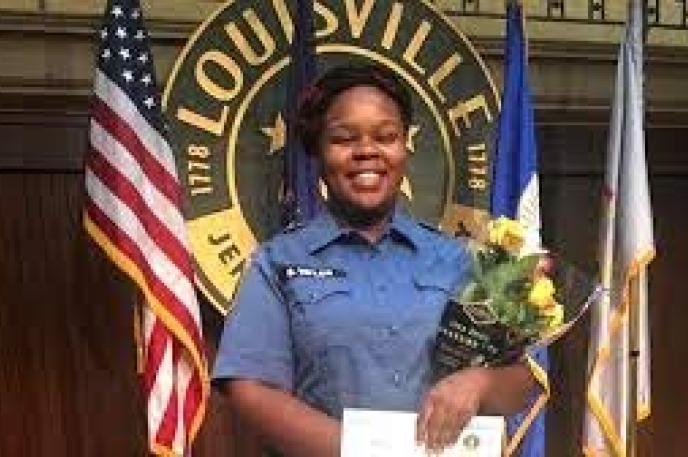
Breonna Taylor

2020 is The Year We Learn to Press On

November 9, 2020

On November 6, 2019, Breonna Taylor tweeted "2020 deff gone be my year WATCH!" On March 13, 2020 --a mere four months later--her precious life came to an end.

As the nation prepared to go into lockdown due to coronavirus, plainclothes officers from the Louisville Police Department administered a no-knock warrant after midnight on Breonna Taylor’s apartment. Breonna, who was inside resting with her boyfriend, believed her apartment was being broken into and her boyfriend fired a warning shot at who they believed to be intruders. After a hail of gunfire, Breonna was dead. In the months following Breonna’s senseless murder, Louisville and many other cities across the nation have been filled with civil unrest.

 To a certain extent, I am becoming numb to the constant unjust murders of Black people by the police. However, Breonna’s murder still sends chills down my spine. It’s because she is the embodiment of everything society teaches you that you need to do as a Black woman to be successful and live a peaceful life: she worked hard to reach her career goals, was educated, didn’t have a criminal record, loved her community and was loved and supported by her loved ones. Yet, her life was still taken. I still tear up when I think about her because that could have been me. And so, it could have been you.

 This year has filled me with a level of fear that is indescribable. If the weight of the pandemic wasn’t enough, as a Black woman I don’t even feel safe in my own home. Like Breonna, I believed 2020 was going to be my year too, but that belief has shifted and evolved. I now believe this is the year I truly learn to press on. I’m becoming more resilient because I refuse to allow racism and inequity to hinder me from pressing on, even when it seems things in the world are crumbling around me. In the moments when I'm filled with sadness thinking of the hardships and tragedies that people who look like me face every day, I am reminded of the power I hold. The work I produce can be transformative for my community and, hopefully, I can remind someone that we must press on even when it seems impossible.

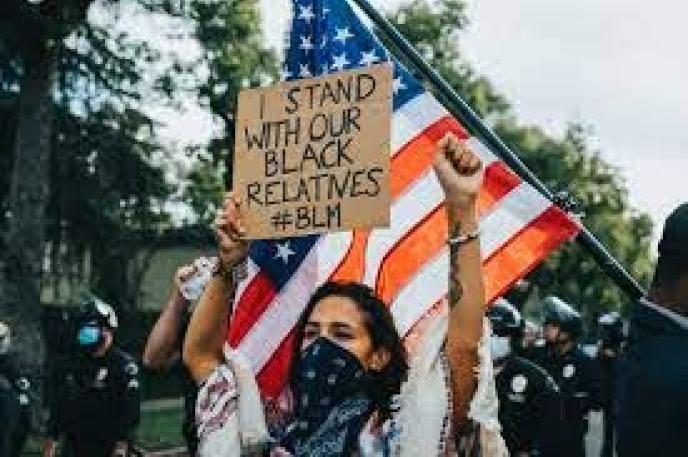
To participate in community conversations, find a Black Lives Matter program event or resource at Charlotte Mecklenburg Library here.

This blog post was written by Cearra Harris at West Boulevard Library.

Thumbnail
South Asians Can be Allies for Black Americans

South Asians Can be Allies for Black Americans

November 9, 2020

I am a part of a multi-faceted, beautifully blended South Asian family. My parents are originally from Gujarat, India. They were married in Nairobi, Kenya after my mother lived there with her brother and other relatives for five years. Many people do not realize that the Indian diaspora is expansive in Southeast Africa – specifically Kenya, Uganda, Tanzania and South Africa. There are a variety of factors that bring people of Indian origin (PIOs) to the continent of Africa, including trade, travel, employment opportunities and curiosity. The British Empire also has a hand in bringing PIOs as indentured servants to Africa to build railroads and cotton gins. 

Even with a slightly interconnected history, the relationship between the South Asian and Black American communities has been strained for years. The model minority myth is one culprit behind this division. I think it is important for South Asians to acknowledge and examine their privilege in the U.S. that comes with this divisive issue. The model minority myth touts the stereotype that Indians are hard-working, intelligent and passive people, in comparison to the general population, and has created a racial dichotomy between South Asians and Black Americans.

South Asians have capitalized on this privilege (as a result of the Civil Rights movement and the passing of the Immigration & Nationality Act of 1965) and many have done nothing to provide support or opportunity to Black people. What is so strange to me is that in our Indian culture, we are taught to keep our relationships close with everyone we meet. My mother and father raised me to call anyone older than me an Aunty or an Uncle. I was raised to call my friends and cousins “bhaiya” (meaning brother) and “behena” (meaning sister). So, why in a culture where we value strength in relationships, have we not employed that same courtesy to Black Americans?

The model minority myth inflated egos throughout the South Asian community and fostered an institutional racism and media bias fear of Black Americans. Unlike Black Americans, South Asians have not experienced centuries of injustices and our actions are not criminalized by the justice system.

So, how can South Asians become allies for the Black community? Educate yourself. Read books like Stamped from the Beginning by Ibram X Kendi, to better understand the history and ideology of racist ideas in America. Read The New Jim Crow by Michelle Alexander and learn about how Black men are disproportionately incarcerated in the US. Read So You Want to Talk About Race by Ijeoma Uluo to learn about microaggressions and how to frame conversations about race & racism. Read The Color of Law by Richard Rothstein to better understand institutional racism and how policies are put into place to oppress Black people. There are countless books to read and explore this topic, but don’t just stop there -- use literature to help combat the racist ideas typically exchanged within South Asian families. Use this knowledge to stand up and say something.

I know most South Asian families are raised to respect our elders and should never say anything to oppose the wisdom of our parents. But what if our parents never learned this information? Don’t be afraid to speak out and share facts & data about the countless injustices towards Black Americans – to help the older members of our community better understand what is really happening to Black people. Framing conversations is an effective strategy for communicating facts and data about racism. Framing conversations means explaining what system of oppression is in play that is negatively affecting the person or people involved. Sharing this data helps to drive a meaningful, productive narrative that exposes systems of disproportionality that are usually ignored or downplayed.

Even though conversations about race can be emotional and polarizing, there is a way to share information that encourages self-reflection and an increased understanding of perspectives we haven’t experienced personally. I will never fully know or understand what a Black person of color goes through, but I can learn from the lived experiences that are shared with me and help to catalyze change through the conversations I have with my friends, family, and circle of influence.

Here are some strategies when framing conversations:

  • tie it directly to a system of disproportionality/oppression
  • tie it to policies that prevent equal opportunity 
  • share and discuss the differences in racial AND socioeconomic disparities between South Asians and Black Americans.

The more you educate yourself about these oppressive systems of disproportionality, the more you will be able to advocate for the rights of Black Americans.

On your path towards becoming an ally, I urge you to examine your own implicit and explicit biases and ask yourself: how have I engaged in the stereotyping of Black people and what can I do to support this historically marginalized community? Your efforts may be new – but for the Black people of America, this is a continuation of a long, hard road towards equality, equity, social and racial justice – so let us stand up together and support our bhaiyas and behenas.

Be a part of the conversation with the Black Lives Matter program and Community Read 2021.

Resources:

https://www.npr.org/sections/codeswitch/2013/11/25/247166284/a-history-of-indentured-labor-gives-coolie-its-sting

https://www.tolerance.org/magazine/what-is-the-model-minority-myth


This blog was written by Amrita Patel in Outreach Services at Charlotte Mecklenburg Library.

Thumbnail
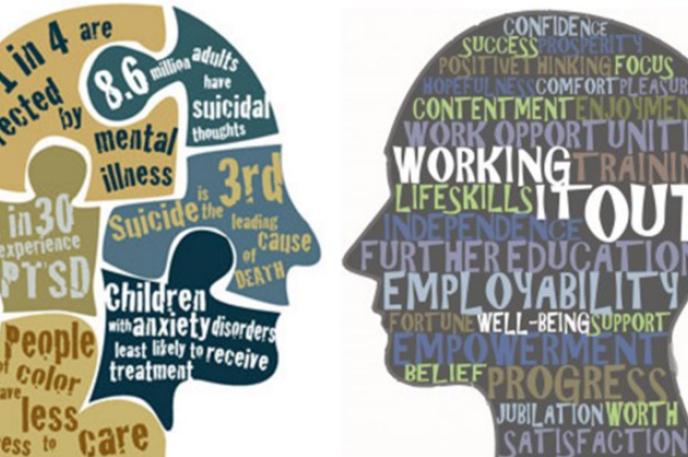
Mental Health and the Black Community

Mental Health and the Black Community

November 9, 2020

This blog was written as part of Charlotte Mecklenburg Library's Black Lives Matter program initiative. Learn  more about the program and corresponding events here.

In the wake of current events, it’s important to take steps every day to better mental health and maintain overall wellness. Mental health is especially important as the holiday season approaches, especially during a time when the U.S. has faced an overwhelming force of injustices.

For this reason, I sat with Nicole Starks, a licensed mental health therapist in Charlotte, to discuss how to begin to dismantle the stigma surrounding mental health in the Black community. She shared her expertise on implementing self-care in our daily lives as there are so many things that the Black community must tackle daily. Ms. Starks knew from a young age that she wanted to help people. In college, she obtained an undergraduate degree in psychology and received a graduate degree in mental health counseling. Ms. Starks has spent most of her career working with children in underserved communities. Currently, she works as a mental health therapist at an adolescent residential psychiatric facility. 

The first topic we addressed was the stigma surrounding mental health in the Black community. Ms. Starks grew up in a small southern town where it was considered taboo to seek mental health help. She reflected on how embarrassing it was growing up to admit she needed help managing her mental health. She outgrew that viewpoint and began to bust the myths surrounding mental health in the Black community.

“We can’t operate at our fullest capacity without maintaining our mental health and wellness,” Ms. Starks explains. She adds, "Our thoughts and feelings affect [our] everyday perspective, and there is nothing wrong with seeking help.” Ms. Starks adds, “If our mental health is diminished in any way, we must seek help to shift our mindset. And honestly, by seeking assistance, we are making the best decision for our overall wellness.”

Tending to your mental health every day as a Black person is a necessity. Ms. Starks explains that “our community has suffered and been through trauma since our ancestors arrived in this country. We are still dealing with the effects of transgenerational trauma today and taking care of your mental health is a part of transforming the mindset away from trauma.”  

The year 2020 has been heavy and we must find ways to deal. Ms. Starks shares tips that we can all use to maintain overall mental wellness. These tips are especially vital as we approach the holiday season:

  • Don’t be in denial about needing help – be open to seeking and receiving it
  • Understand that seeking assistance doesn’t make you weak or indicate something is wrong with you
  • Find a mental health therapist today

Seasonal depression (or holiday blues) is a real thing. So, as we approach these colder months, Ms. Starks recommends we lean on our community. Be vulnerable when you need to and find creative ways to stay connected to those that we love. Lastly, she shared that we should stay away from social media as much as possible and use our free time to invest in ourselves. 

A significant way to begin to invest in ourselves is to implement self-care in our daily lives. Ms. Starks says, “Self-care is vital to how we function, and it allows us to be in tune with ourselves. By being in tune with ourselves, we can recognize and address our daily wellness needs. It (self-care) doesn’t have to be extravagant and can be as simple as taking a nap or planning a trip. We must find time to figure out what makes us feel at peace and recharge. Self-care allows us to take a moment to get reconnected with ourselves and maintain the motivation needed to continue each day. Lastly, that discovering a new hobby or merely treating yourself defines the best self-care for you.”

We concluded our conversation by discussing how we can support the people we love who may struggle with their mental health. She reminded me “It is ok for us not to have the answers and ask what is needed. We should listen without judgment and be a shoulder. Avoid comparing situations and never minimize suffering. We must understand that we all have different mental capacities. To show support, we should validate others’ experiences and feelings, and we all must recognize that this is all a normal part of life.” 

The best thing we can do for ourselves is to take a step every day to maintain our mental health. Ms. Starks shared some great tips we all could implement in our daily lives. To close, she left me with a game-changing tip: We must remember that we cannot help others if we are unwilling to help ourselves. 

Interviewee: Nicole Starks, MA, LCMHCA

Official Job Title: Mental Health Therapist


This blog was written by Cearra Harris at West Boulevard Library.