Wait time for new book arrivals may increase. Learn more

510 of 1133 results
Thumbnail
Important information about delays in holds at Charlotte Mecklenburg Library.

Delays in holds at the Library

January 3, 2022

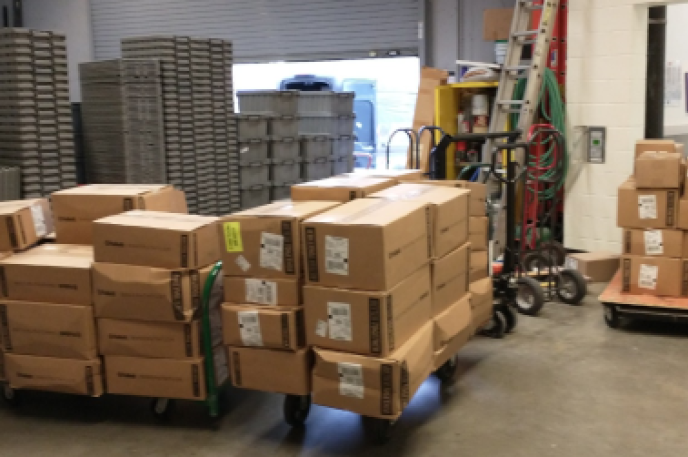
You might have noticed your holds aren’t arriving as quickly as you’re used to. Or those Halloween titles you requested for your children weren’t on the shelves until well into December! Due to unprecedented supply chain delays and worker shortages, some titles have been delayed or canceled altogether. Books are sitting in warehouses or container ships for months, waiting for workers to process them and ship them to us.

We apologize for the longer than usual wait times, which are unfortunately a common problem right now, but please know we’re working our hardest to make sure the books, DVDs, audiobooks, and other library materials you love are in your hands as soon as we’re able to get them to you. We appreciate your patience and look forward to returning to the timely service you’ve come to expect!

--

This blog was written by Bethany Pierce, librarian for Charlotte Mecklenburg Library.

Thumbnail

Share your Library love story

January 11, 2022

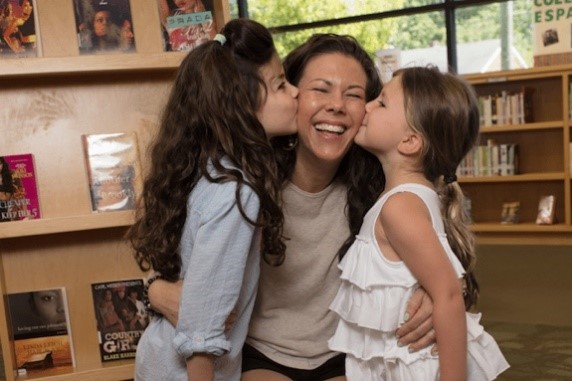
What better place to fall in love than the Charlotte Mecklenburg Library? We don’t mean romantic love alone. All love is welcome here. Familial, platonic, volunteer, literary—you name it.

As an essential community connector, libraries are places where people fall in love with, and among, books – and we want to hear your story. Have you made a new a friend at a Library program or while serving as  a Library volunteer? Maybe a Library employee suggested to you a self-help book that changed the trajectory of your life and your love self. Or, maybe your dog helps shy readers conquer their fears of reading aloud each week through a Paws to Read program at your local library branch and inspiring literacy in children brings you joy.

That’s a whole lot of love to share.

This is your chance to let the Charlotte Mecklenburg Library know how we've helped you fall in love with financial literacy, locate your dream career or introduced you to a life-changing hobby. And, if really did brush hands with the love of your life while looking for a good read at the Library, we want to know about that too.

SHARE YOUR LIBRARY LOVE STORY by Friday, February 4, 2022.

*Collected stories will be lightly edited (punctuation, spelling, etc.) and used on the Charlotte Mecklenburg Library blog, social media platforms and in other areas where marketing the stories is deemed appropriate. Participation in this survey is voluntary and only first names will be used in public posts.

Thank you for sharing the love.

Thumbnail
Get to know the community surrounding Hickory Grove Library and all it has to offer.

Get to know the Hickory Grove Branch community

January 13, 2022

The Hickory Grove Branch Library is located on the Eastside of Charlotte, NC. This vibrant and eclectic neighborhood connects deeply with the immigrant community with everything from diverse restaurants and grocery stores to language immersion schools and of course, the library itself. The Hickory Grove Branch has a large world language collection for all ages with Spanish being the largest number of items represented in the collection. Additionally, ten other languages are represented including Vietnamese, Chinese, French, Japanese and Korean.

Charlotte Mecklenburg Library, Hickory Grove Branch in Charlotte, NC |  Reader's DigestWithin just a couple of miles from the library, this community has two Spanish language immersion education programs. Charlotte Bilingual Preschool for ages three through five has provided innovative solutions for preparing Spanish-speaking children for success in school by providing superior dual language, multi-cultural early childhood education. And they have been providing this educational service in the Hickory Grove neighborhood for over twenty-two years. In the other direction, located in the old Eastland Mall Parking lot, is the Charlotte East Language Academy for kindergarten through eighth grade.  The school was established in 2018 and is a Title I school.

The Hickory Grove neighborhood has several community organizations dedicated to helping newcomers settle into life here in the Queen City. OurBRIDGE for Kids is a nonprofit organization that supports the immigrant and refugee community in Charlotte by providing afterschool programming and other community-based initiatives. The Latin American Coalition is a community of Latin Americans, immigrants and allies that promotes full and equal participation of all people in the civic, economic, and cultural life of North Carolina through education, celebration and advocacy. Finally, the Simmons YMCA New American Welcome Center is designed to provide a combination of services and strategies to connect and enhance cross-cultural understanding. With a focus on language and education, employment, health and wellbeing, citizenship and civic engagement, and the Y helps empower immigrants to achieve their full potential.

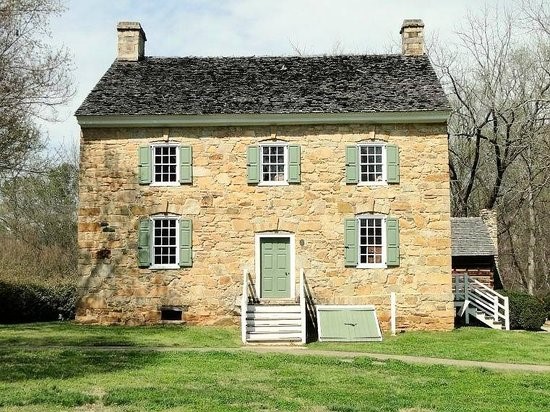
black snake - Picture of Charlotte Museum of History - TripadvisorEast Charlotte is also home to the Charlotte History Museum. This museum features programs and exhibits that explore important civic themes and how their meaning has evolved over time, including ideals of liberty, freedom, equity, justice, democracy, and citizenship. The museum sits on an eight-acre wooded campus and it is also the site of the oldest surviving house in Mecklenburg County, the Rock House, which was built circa 1774 for the Hezekiah Alexander household. And if you need to grab a bite after a day at the museum, Antoine James, the Access Services Manager at Hickory Grove, highly recommends our area for its food and restaurants. His favorite? Why Not Pizza located right next door to Hickory Grove Library. They have everything from pizza and pasta, to subs and wings. It is a staff favorite for sure!

New to Charlotte? Explore other neighborhoods through the Charlotte Mecklenburg Library blog and WelcomeCLT, a digital space created for newcomers to Charlotte.

Resources:

--

This blog written by Lonna Vines, children's librarian for Charlotte Mecklenburg Library.

Thumbnail
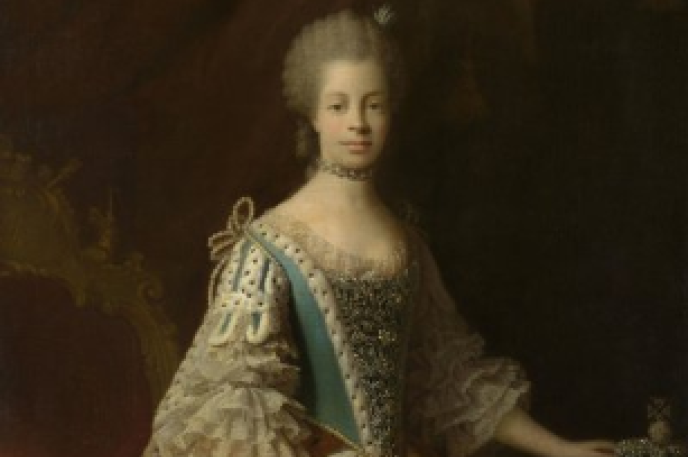
A portrait of Queen Charlotte of Mecklenburg. Find a hand-written letter from the Queen at the Charlotte Mecklenburg Library.

Why is Charlotte called the Queen City?

September 4, 2019

Charlotte, North Carolina, was first settled after colonists made their way down the Great Wagon Road. Northern colonies in Pennsylvania, Maryland and Virginia had become crowded, so settlers went south to seek religious and economic freedom, as well as to take advantage of quality farmland. Native Americans used this trail for hunting, trading, and war long before the settlers used it to migrate south. The Native Americans named the trail “Warriors Path.” 


Conestoga Wagon, courtesy of Wikimedia. 

Before Charlotte was chartered in 1768 by the colonial North Carolina General Assembly, settlers called the area “Charlottetowne” after Queen Charlotte Sophia of Mecklenburg-Strelitz. The settlers sought to honor Queen Charlotte’s husband, King George III, as well as to sway Assemblymen into making Charlotte the site of the county courthouse as a political bid. Courthouses enabled cities to grow economically by serving as a hub for visitors and business during quarterly sessions. The Assemblymen chartered the city of Charlotte in 1768 and entitled the city to a courthouse and a prison.  

The charter reads: 

“Be it therefore Enacted, by the Governor, Council, and Assembly, and by the Authority of the same, That the said Three Hundred and Sixty Acres of Land, so laid off by the Commissioners or Trustees as aforesaid, be, and the same is hereby constituted, erected, and established, a Town and Town Common, and shall be called by the name of Charlotte.” 

-- Acts of the North Carolina General Assembly, 1768; North Carolina. General Assembly; November 07, 1768 - December 05, 1768; Volume 23, Pages 759-783; CHAPTER XI. 


1766- The First Mecklenburg County Courthouse (modern interpretation). Courtesy of the Robinson-Spangler Carolina Room. 

Mecklenburg County, the county in which the city of Charlotte exists, was also named in honor of Queen Charlotte. Charlotte’s birthplace was Mecklenburg-Strelitz, which is a province in present-day northern Germany. Queen Charlotte never actually visited our city, but one of her handwritten letters is housed at the Robinson-Spangler Carolina Room in the Main Library: 


Queen Charlotte Letter, 1812. Courtesy of Charlotte Mecklenburg Library, Robinson-Spangler Carolina Room. 


Who was Queen Charlotte anyway?   


George III (1738-1820), Queen Charlotte (1744-1818) and their Six Eldest Children. Courtesy of Zoffany Royal Collection Trust/© Her Majesty Queen Elizabeth II, 2014. 

Queen Charlotte Sophia was born in Mecklenburg-Strelitz (in the Holy Roman Empire) in 1744, to Duke Charles Louis Frederick of Mecklenburg and Princess Elisabeth Albertine of Saxe-Hildburghausen. As a child, she was educated by a priest in botany, natural history and language, but focused her studies in housekeeping and religion. As demonstrated by the letter above, Charlotte learned how to read and write. These were rare skills for women during that time—her royal status permitted her to have access to education through multiple tutors.  


Unfinished portrait depicting the marriage of George III to Charlotte of Mecklenburg-Strelitz on 8 September 1761, Sir Joshua Reynolds. Courtesy of Royal Collection Trust. 

At 17 years old in 1761, Charlotte was engaged to King George III. She was an attractive option to wed because she was born in an “insignificant” part of Europe and would likely have no interest in politics; she was instructed by George III after their wedding “not to meddle” in politics, which she obeyed. However, she did have indirect political influence—she used her closeness to George III to keep herself informed and to recommend office appointments, as well as keep German interests in mind. She did not speak English at first but learned quickly. One observer commented, "She is timid at first but talks a lot, when she is among people she knows."  


View of Buckingham House from WH Pyne, The History of the Royal Residences, 1819 (Courtesy of the British Library).

Although St. James Palace was the official Royal residence, Queen Charlotte fell in love with Buckingham House, which she and George III moved into shortly after purchasing. She gave birth to 14 of her 15 children in the house that eventually became known as “The Queen’s House.” This property is now popularly known as Buckingham Palace. 


Wolfgang Amadeus Mozart Opus 3 Dedication Page. Courtesy of Bibliorare. 

Queen Charlotte had a passion for music, so she brought a harpsichord with her from Germany and took lessons from Johann Christian Bach, son of Johann Sebastian Bach. Wolfgang Amadeus Mozart once played the organ as Queen Charlotte sang on a family trip to England when he was 8 years old. Mozart later dedicated his Opus 3 to his beloved queen. On the dedication page he wrote, “Filled with pride and joy at daring to offer you a tribute, I was finishing up these sonatas to be laid at the feet of your Majesty [Queen Charlotte]; I was, I confess, drunk with vanity and thrilled with myself, when I spied the Genius of Music at my side.”  


Queen Charlotte (1744-1818) by Sir Allan Ramsay, ca. 1761-1769. Courtesy of Royal Collection Trust, https://www.rct.uk/collection/402413/queen-charlotte-1744-1818 

According to some genealogists, Queen Charlotte is informally considered the second biracial Queen of England. She was purportedly a direct descendent of Margarita de Castro e Sousa, a member of the African branch of the Portuguese Royal House. Early portraits of the Queen show that Charlotte had hints of African physical attributes. Sir Allan Ramsay painted many portraits of Queen Charlotte, seen above. Writings from the period also alluded to her “mulatto” appearance, meaning “one with mixed black and white ancestry.”  

As anti-slavery movements in England became more prevalent, royal portrait painters were instructed to soften “undesirable” features in their subjects’ faces. This included making Queen Charlotte’s skin tone appear lighter and manipulating other physical features. In fact, Ramsay’s Coronation portrait of Charlotte was distributed in England and the colonies to subtly stoke anti-slavery sentiment due to the prevalence of Charlotte’s African features.  


A photo of Kew Gardens, the royal botanical garden Queen Charlotte helped maintain. Photo by Kew Gardens. 

Queen Charlotte had a keen interest in botany and played a large role in expanding and preserving Kew Gardens, the Royal botanical gardens in Kew, England. She was known by the British public as the “Queen of Botany,” and botanists named the Bird of Paradise, a flower native to South Africa, the Strelitzia reginae in her honor. Charlotte turned to botany when she struggled with her mental health, which is when she planned the gardens of the Frogmore House in Windsor.  

Queen Charlotte was also a philanthropist, founding several orphanages in England. She founded and was named the Patron of the General Lying-in Hospital in London, which was later named The Queen’s Hospital and is now known as The Queen Charlotte’s and Chelsea Hospital. Queen Charlotte was also known to offer aid to poor families, as well as helped struggling musicians. 

--

Sources:  

Blakemore, Erin. “Meghan Markle Might Not Be the First Mixed-Race British Royal.” History. https://www.history.com/news/biracial-royalty-meghan-markle-queen-charlotte. Accessed August 2019. 

Cooper, Jean L. and Angelika S. Powell. “Queen Charlotte’s Letters.” http://people.virginia.edu/~jlc5f/charlotte/letter_intro.html. Accessed August 2019.  

“England’s 18th Century Black Queen, Sophie Charlotte born.” AAREG. https://aaregistry.org/story/englands-first-black-queen-sophie-charlotte-born/. Accessed August 2019. 

Fraser, Flora. “Princesses: The Six Daughters of George III.” New York: Knopf, 2005. (CML Call No. 941.073 Fraser) 

Hanchett, Tom. “The History of Charlotte.” Charlotte. https://www.charlottesgotalot.com/articles/history/the-history-of-charlotte. Accessed August 2019. 

Hedley, Olwen. “Queen Charlotte.” London: J. Murray, 1875. (NCR B C479c H455) 

“History Timeline, Rural Beginnings 1730-1772, 1776- The First Mecklenburg County Courthouse.” Charlotte Mecklenburg Story. https://www.cmstory.org/exhibits/history-timeline-rural-beginnings-1730-1772/1766-first-mecklenburg-county-courthouse. Accessed August 2019. 

“History Timeline, Rural Beginnings 1730-1772, 1768- Charlotte Chartered.” Charlotte Mecklenburg Story. https://www.cmstory.org/exhibits/history-timeline-rural-beginnings-1730-1772/1768-charlotte-chartered. Accessed August 2019.  

Jackson, Marshall R., III. “Great Wagon Road.” NCPedia.  https://www.ncpedia.org/great-wagon-road. Accessed August 2019.  

“Queen Charlotte (19 May 1744- 17 November 1818.” The Royal Family. https://www.royal.uk/. Accessed August 2019. 

Valdes y Cocom, Mario de. “The Blurred Racial Lines of Famous Families: Queen Charlotte.” South Carolina etv. https://www.pbs.org/wgbh/pages/frontline/shows/secret/famous/royalfamily.html.  

Walk-Morris, Tatiana. “Five Things to Know About Queen Charlotte.” Smithsonian Magazine. https://www.smithsonianmag.com/smartnews-arts-culture/5-things-you-didnt-know-about-queen-charlotte-180967373/. Accessed August 2019. 
Thumbnail
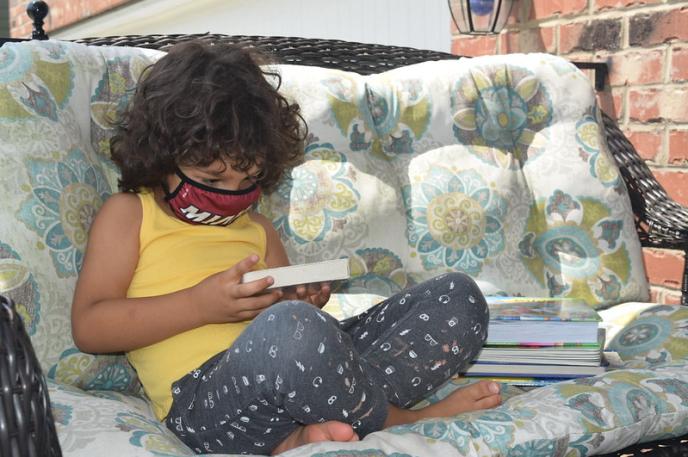
A child reads books from Charlotte Mecklenburg Library at home.

Go back to school with Charlotte Mecklenburg Library

August 17, 2020

August is here, and with this onset comes a brand-new school year, often with shiny school supplies, fresh uniforms, clothes and even a new pair of shoes if you’re lucky. For many of us this year, the back-to-school rush and necessities look different as school-age children will mostly return to school in a virtual setting. This presents new challenges. While you may not buy new uniforms or a new backpack this year, you still need to prepare for what’s ahead and the Charlotte Mecklenburg Library is here to support all your back to school needs.

Virtual Learning Opportunities

Did you know that the Library provides a multitude of virtual learning programs to enrich your child’s academic and social skills? The calendar is filled weekly with school-age programming you can enjoy from anywhere! If your child can’t make the live programs, you can find them archived online at your convenience. You’ll find many pre-recorded programs to enjoy too! Some sample program titles include: Make Your Own Animation, Magical Creature Book Talk and even Fireworks in a Glass. Invite your child to view our specialized content to elevate and extend their learning. Virtual programming is not limited to children in elementary schooler, it’s available for all age groups. Teens can join in writing groups, book clubs, trivia sessions and gaming sessions such Dungeons and Dragons. While you get into your back-to-school routine, be sure to join a group and meet new friends.

ONE Access and Curated Lists by Grade Level

Every child in the Charlotte Mecklenberg School system can use their student ID number as their Library card number – this is called a ONE Access ID number (the pin number is your child’s birth year). Yes, you heard that right! It’s called ONE Access, or One Number Equals Access, and it makes it very convenient for your child to place books on hold or check out digital resources. Our Library staff have even created curated lists for students to read by grade level. Check them out here: Elementary, Middle and High School. Your child’s ONE Access ID number doesn’t just limit them to books. There are many e-resources to utilize such as Tutor.com (up to 10 free, live homework tutoring sessions each week), Mango Languages (learn a new language) and Freegal music (for any planned or unplanned dance party breaks!). The possibilities are endless with free learning resources offered through your Library.

Educational Support

The Library is committed to improving lives and building a stronger community – a lofty goal as evidenced by our commitment to programming and helping your child prepare for their next step beyond high school. Library branches offer one-on-one weekly virtual appointments with teens to discuss how to successfully plan for the future. Library staff members can connect your high schooler with resources to plan for a potential job or college process, including financial aid and scholarship opportunities. One-on-one virtual appointments are available daily for elementary schoolers as well for Reading Buddies, tutoring and enrichment! Feel back-to-school ready knowing your local Library will support your child’s learning beyond the (virtual) classroom.

Parent Learning Opportunities

Getting ready for the start of a new school year is not limited to children. Parents and caregivers can get back-to-school ready by learning something new too! Virtual caregiver classes are offered for a variety of age levels (children ages 2-5, students in grades K-5). Learn how to read WITH your child, and improve your child’s language, vocabulary and comprehension skills. Classes are also offered on how to access our digital Library resources for virtual learning. Build your confidence and meet other caregivers just like you- we're all in this together!

While the return to school this year presents new challenges, it also presents new opportunities. Charlotte Mecklenburg Library is prepared to meet this challenge with you, fully equipped and ready to provide you and your school-age child with an opportunity to learn and grow. Take advantage of the opportunities that await you and your children this school year!  

--

This blog was written by Elyse Berrier of Charlotte Mecklenburg Library

Thumbnail
Thank you to all of our customer for participating in the double Summer Break challenge!

Thank you for participating in the double Summer Break challenge

August 17, 2020

Thank you for participating in the double Summer Break challenge for 2020! We hope you enjoyed your experience with our new website through Beanstack.

We’ll be sending out a survey in a few weeks asking for feedback, and we would love to hear from you! If you have a great story about how participating in Summer Break helped you or your family this summer, please share this with us! We would love to hear inspiring stories of how reading and learning makes a difference in your lives.

Your Reading Makes A Difference!

Many of you may have noticed that you earned a “Giving Makes the World Go Round Badge.” Participants earn this badge when they reach 15 hours of reading in each Summer Break challenge.

Every summer, the Library gives back to the community by donating books to a local organization in need. This year’s recipient will be Charlotte Mecklenburg Schools. Charlotte Mecklenburg Library is happy to donate to CMS and we are thankful the school system will accept the contributions.  


Summer Break: Reading Takes You Everywhere Prize Pickup Is Underway!

Remember, participants have until Saturday, September 26th to claim and pick up prizes while supplies last.

The registration prize of a FREE Wendy's Jr. Frosty coupon can be picked up at any library.

For completion prizes, customers must call 704-416-7200 to claim their prize before visiting a library. Staff can assist them with their accounts and any questions as well as give them the next steps to get their prize. Customers who earn a Wendy’s Jr. Frosty coupon do not need to call the line above to claim, just visit any Charlotte Mecklenburg Library branch.


What are the completion prizes?

Participants in Summer Break: Reading Takes You Everywhere earn a completion prize when they achieve 600 points.


Completion prizes are:

  • Babies/children: a book
  • Teens: choice of a book or doodle notebook
  • Adults: A Library tote bag


All prizes are first-come, first-serve while supplies last.